

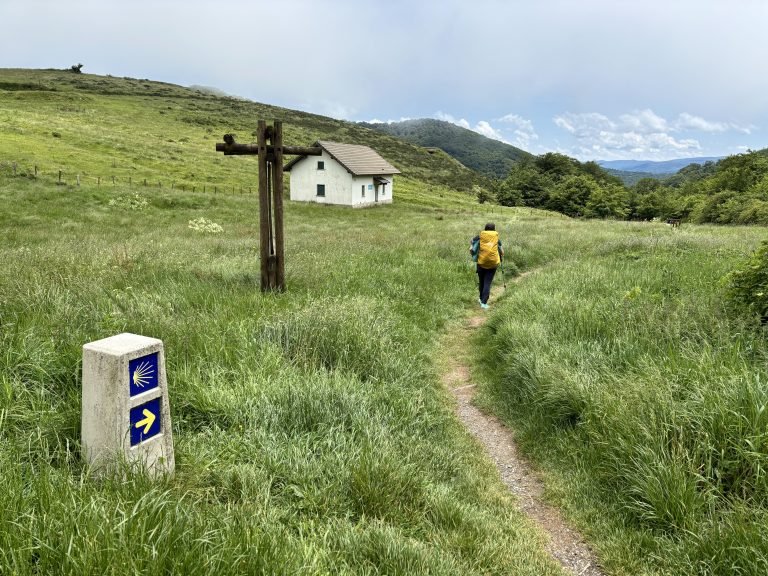
June 7, 2025
Through Mist and Mountains to a Monastery

“The Camino is like life—sometimes you get great weather, sometimes you get bad weather.”
Those words from a fellow pilgrim echoed in my mind as we woke at 6:15 AM to a world wrapped in thick mist. Gone were yesterday’s spectacular valley views. In their place: an impenetrable white curtain that transformed our morning into something mysterious and magical.
A Simple Breakfast, An Early Start

We brushed our teeth, washed our faces, pulled on our hiking clothes, and packed everything into our backpacks. Breakfast started promptly at 7:00 AM with a firm warning that it would end exactly at 7:30. The doors opened at 6:55, and we sat down with two Americans, one of whom had done part of the Appalachian Trail.
The meal was basic but sufficient: two pieces of bread, hot coffee, cereal, and vanilla milk. Nothing fancy, but enough fuel for the journey ahead.
Into the Clouds
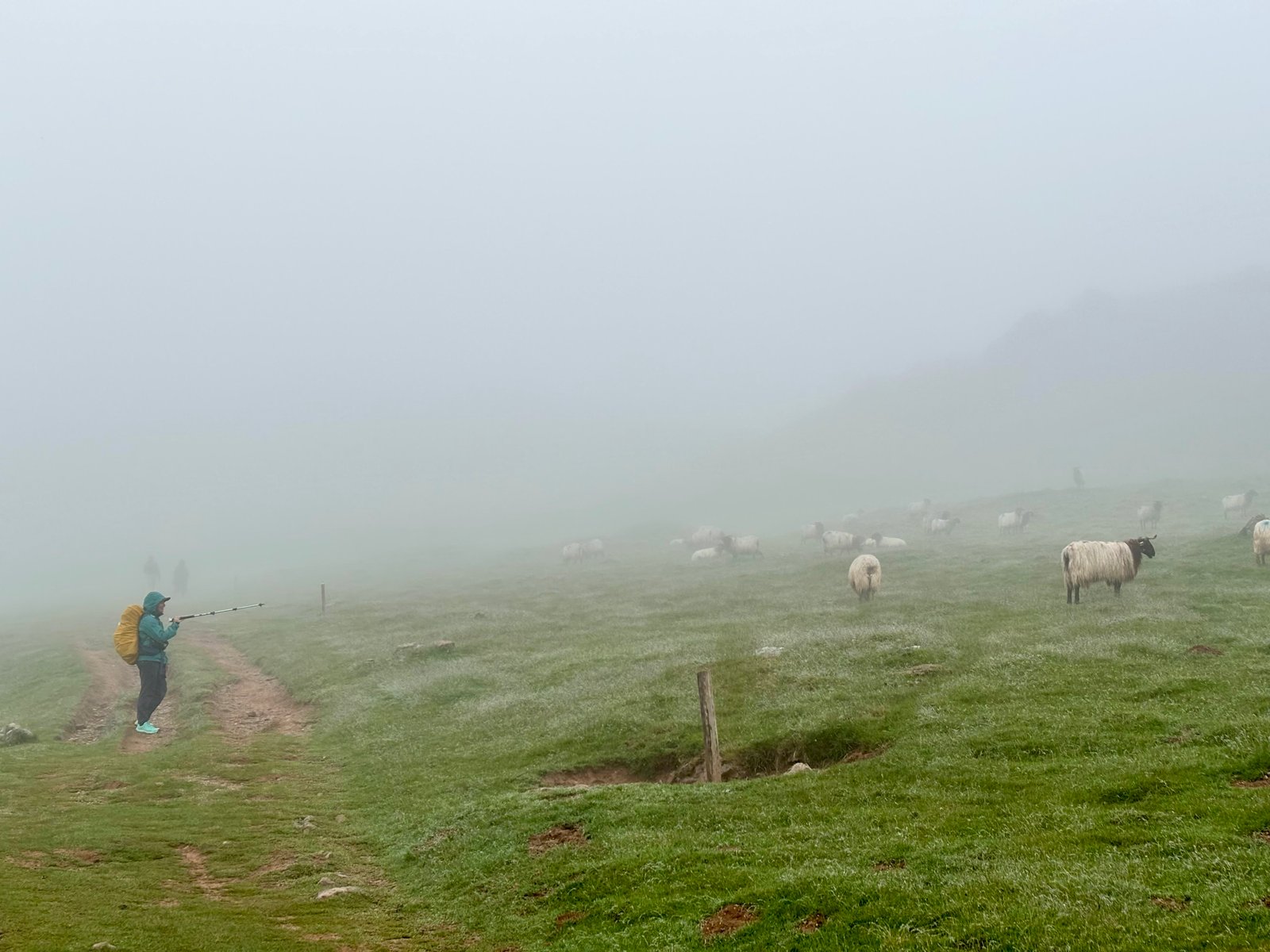
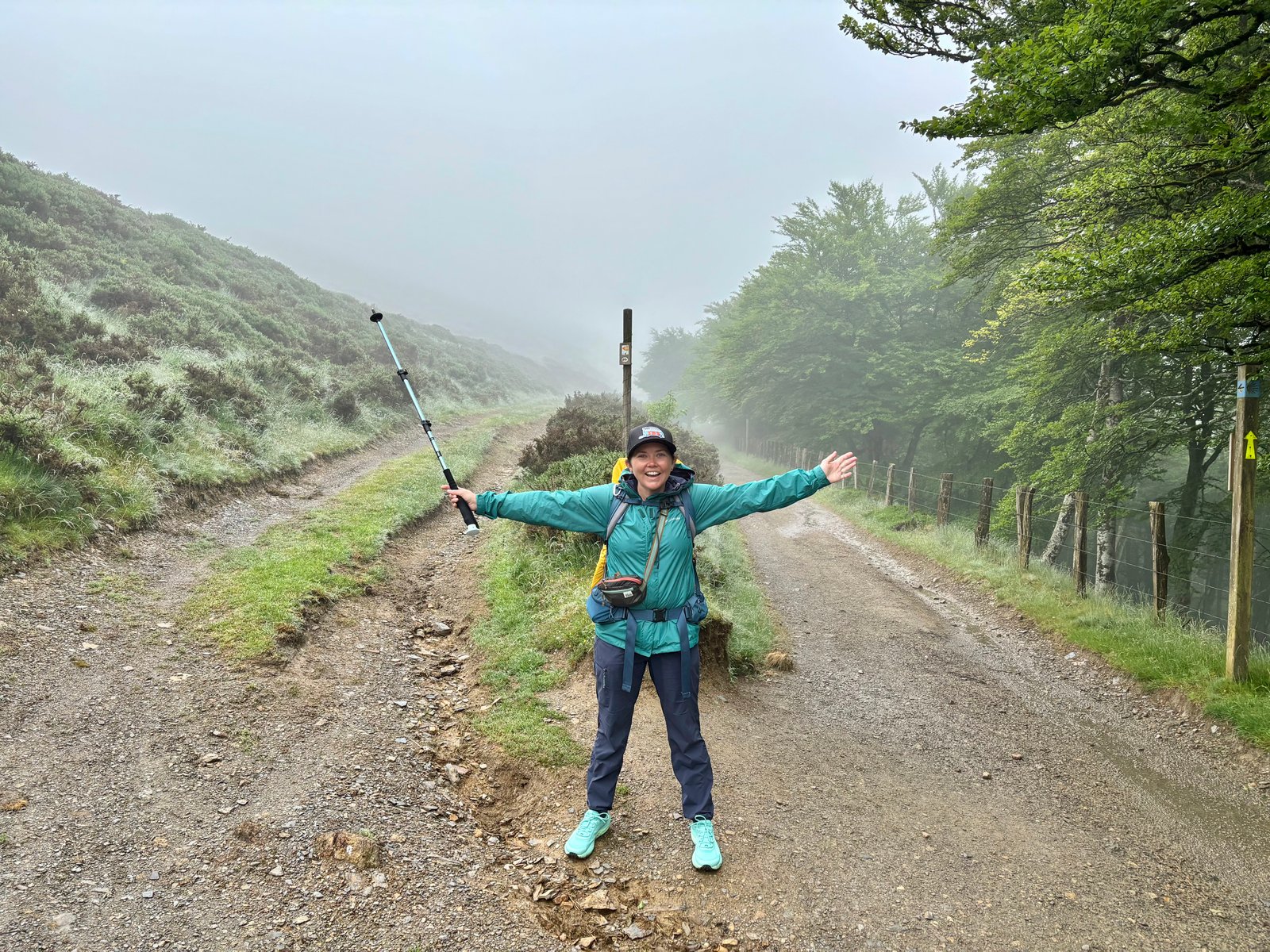
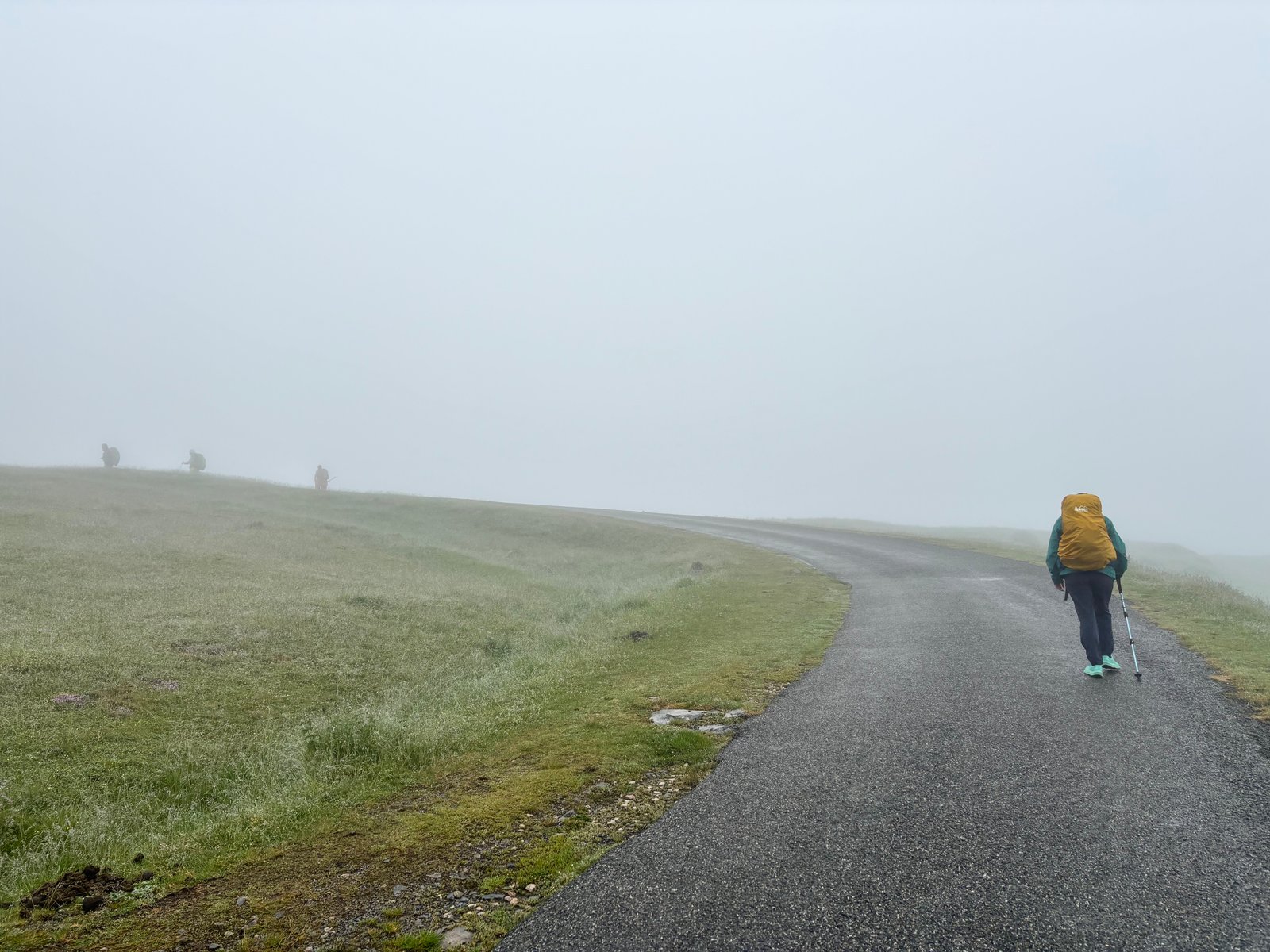
We set out into the misty morning, rain jackets on, backpacks covered with rain shields. The world had shrunk to just a few meters in any direction, but we kept climbing upward.
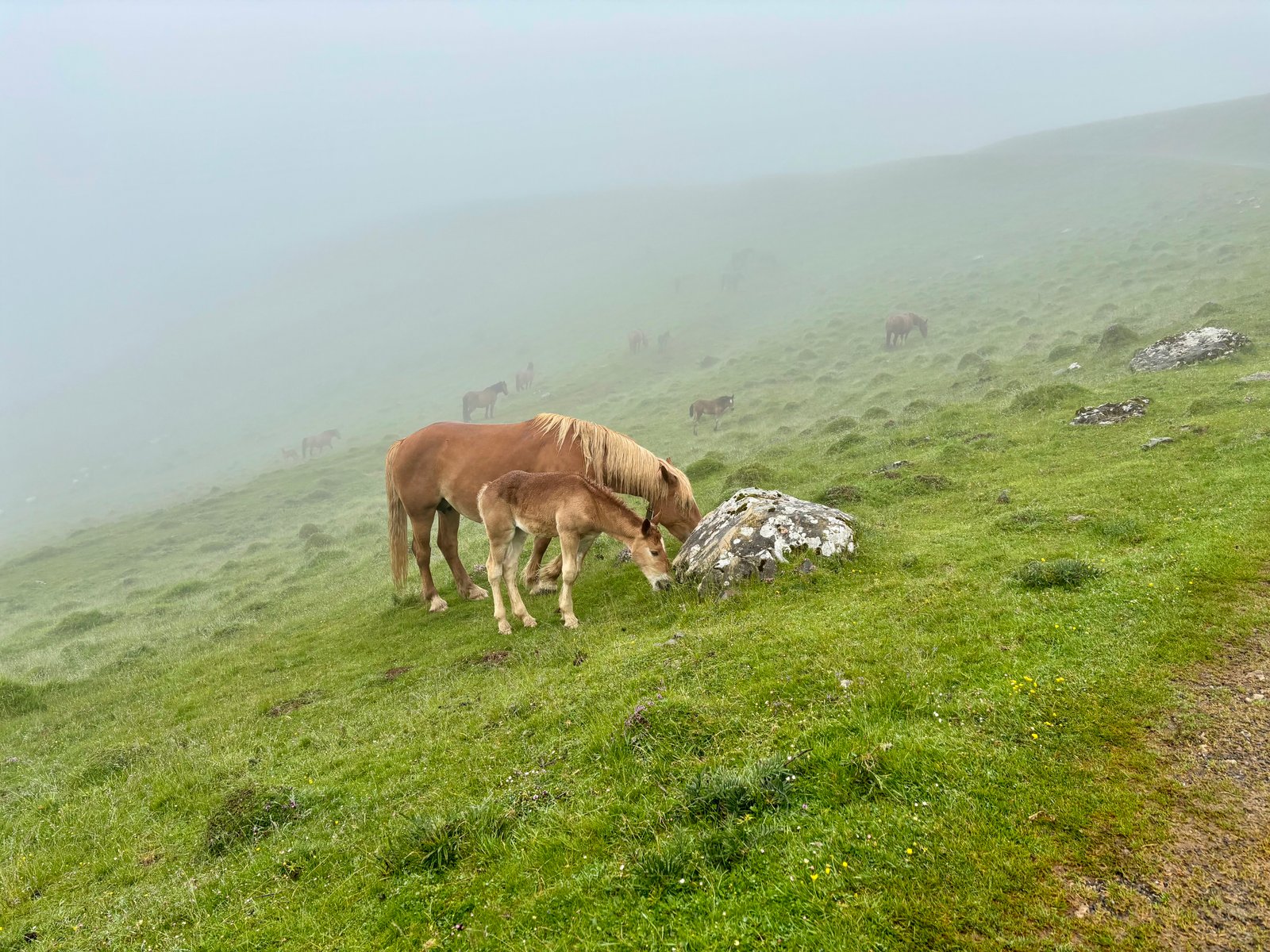
The landscape revealed itself in fragments through the fog. First, we came across spectacular horses—huge animals, some wearing bells that clanged softly as they grazed. An interesting encounter between man and a horse happened when a pilgrim doing the Camino on a bike came face-to-face with a horse unwilling to move from his path. A lot of yelling and bell ringing did nothing and ultimately the biker had to squeeze between horses and pray that they were in a good mood that morning. Luckily he passed through unscathed. We passed many sheep and saw evidence everywhere of how animals had shaped this farmland over centuries.
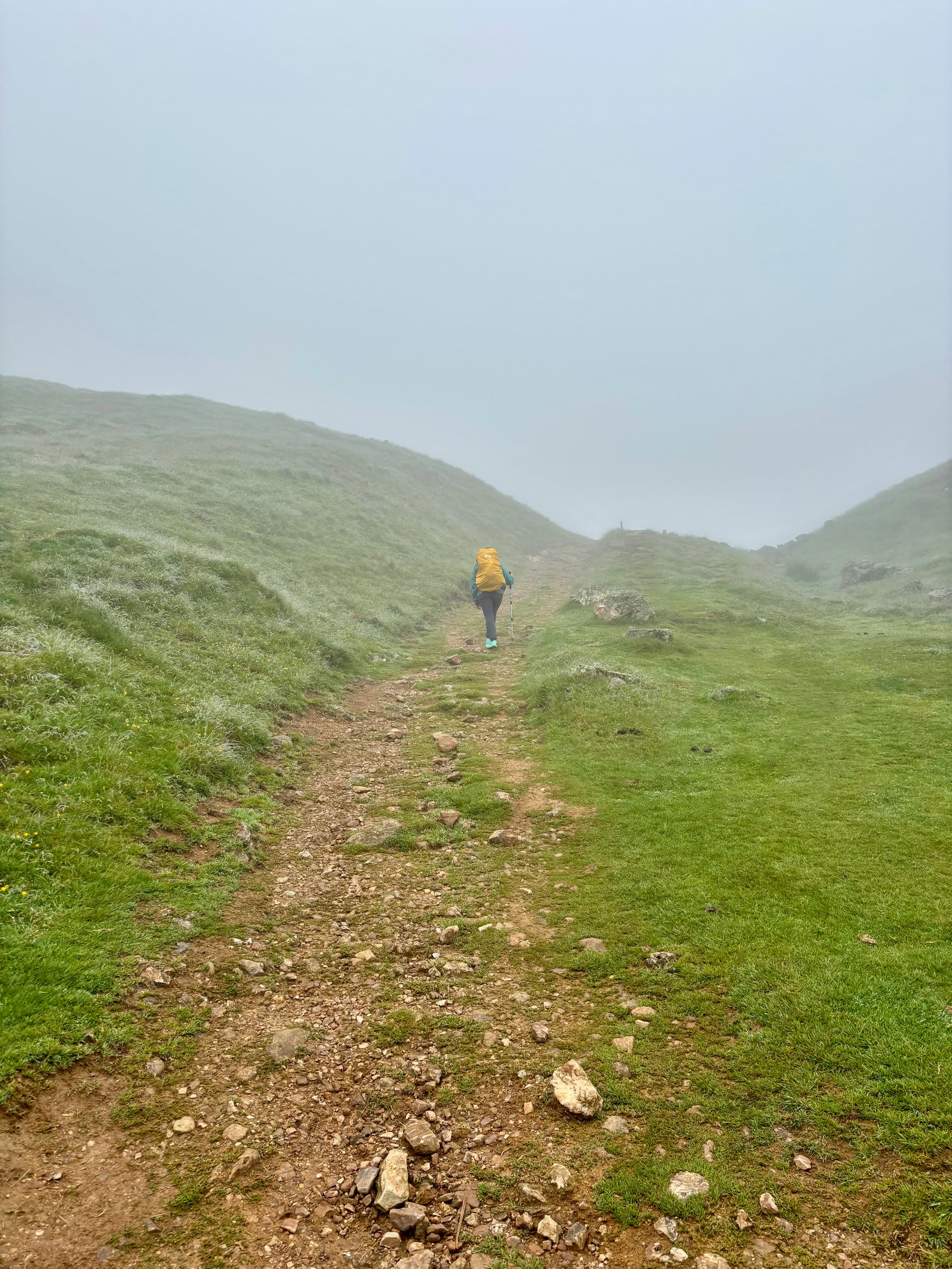
The mist stayed with us the entire climb. We didn’t have the clear views of yesterday, but there was something undeniably magical about hiking through the clouds. The weather was perfect for hiking, actually—cool and mysterious.
The Miracle Minivan
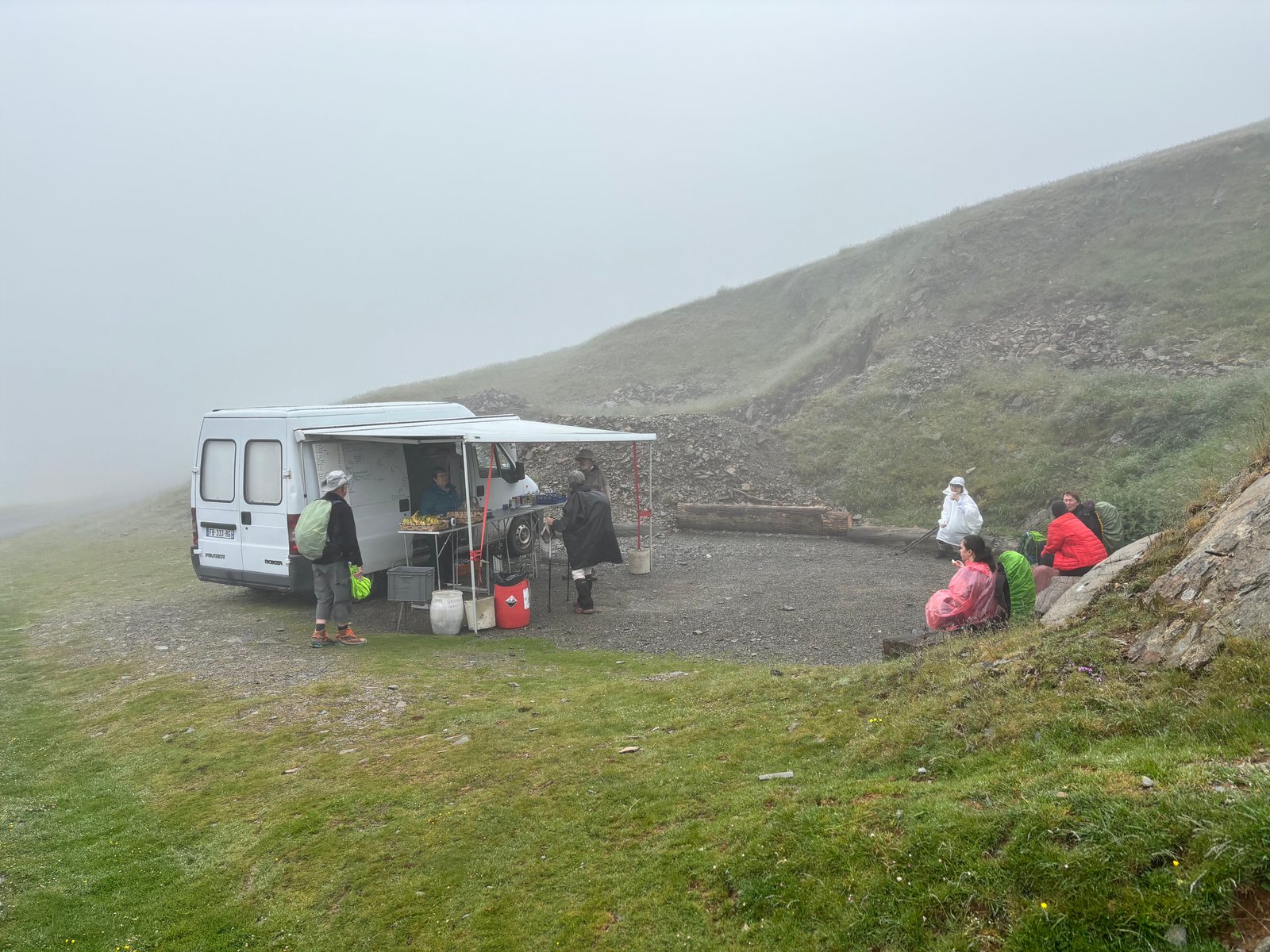
Partway up, we discovered a pilgrim’s oasis: a food truck minivan selling hot chocolate, espresso, coffee, bananas, and eggs. We each got a boiled egg, and the protein felt like instant energy. A sign near the van offered hope: 1 kilometer uphill left, then 5 kilometers flat, then 5 kilometers downhill.
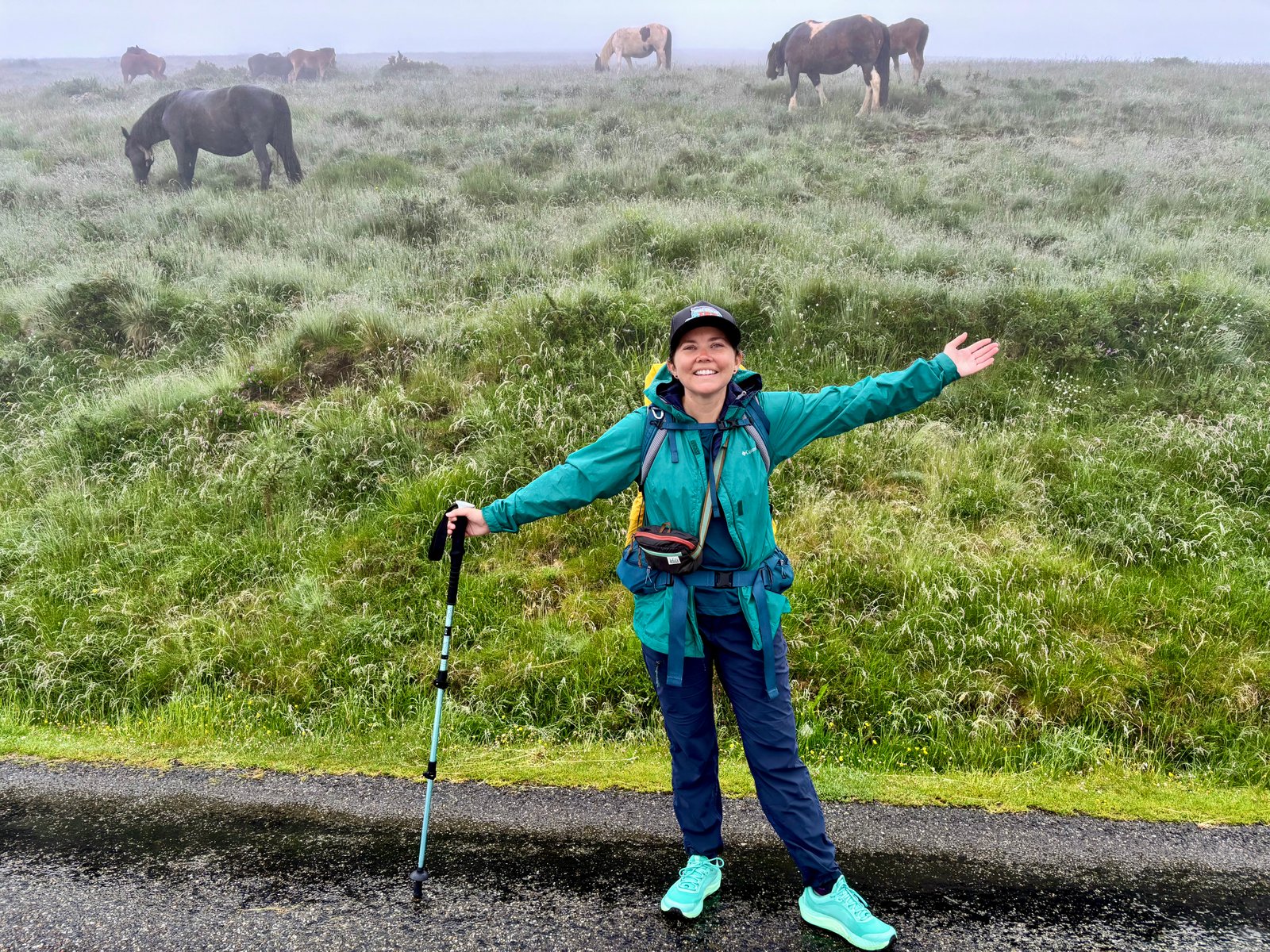
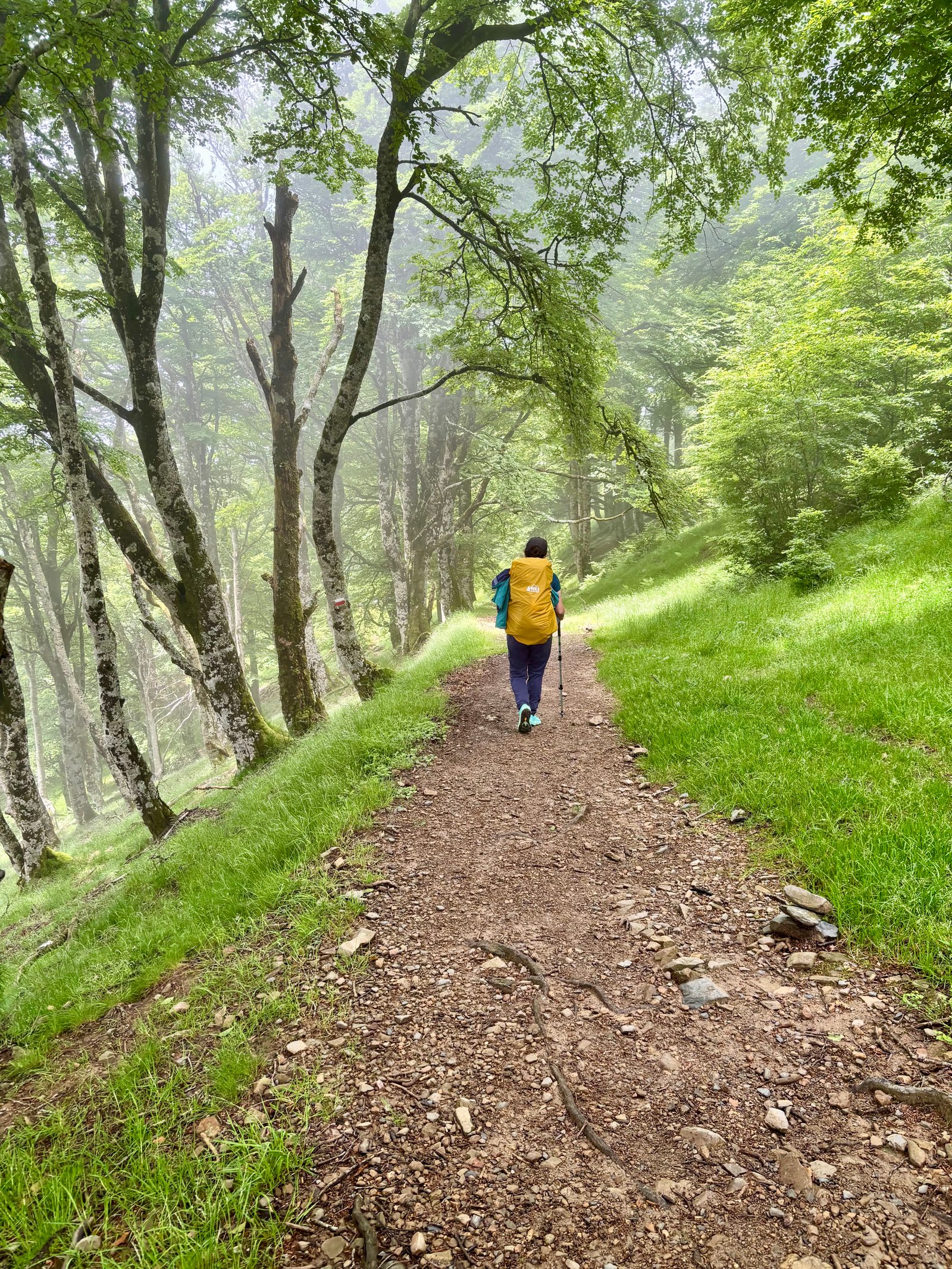
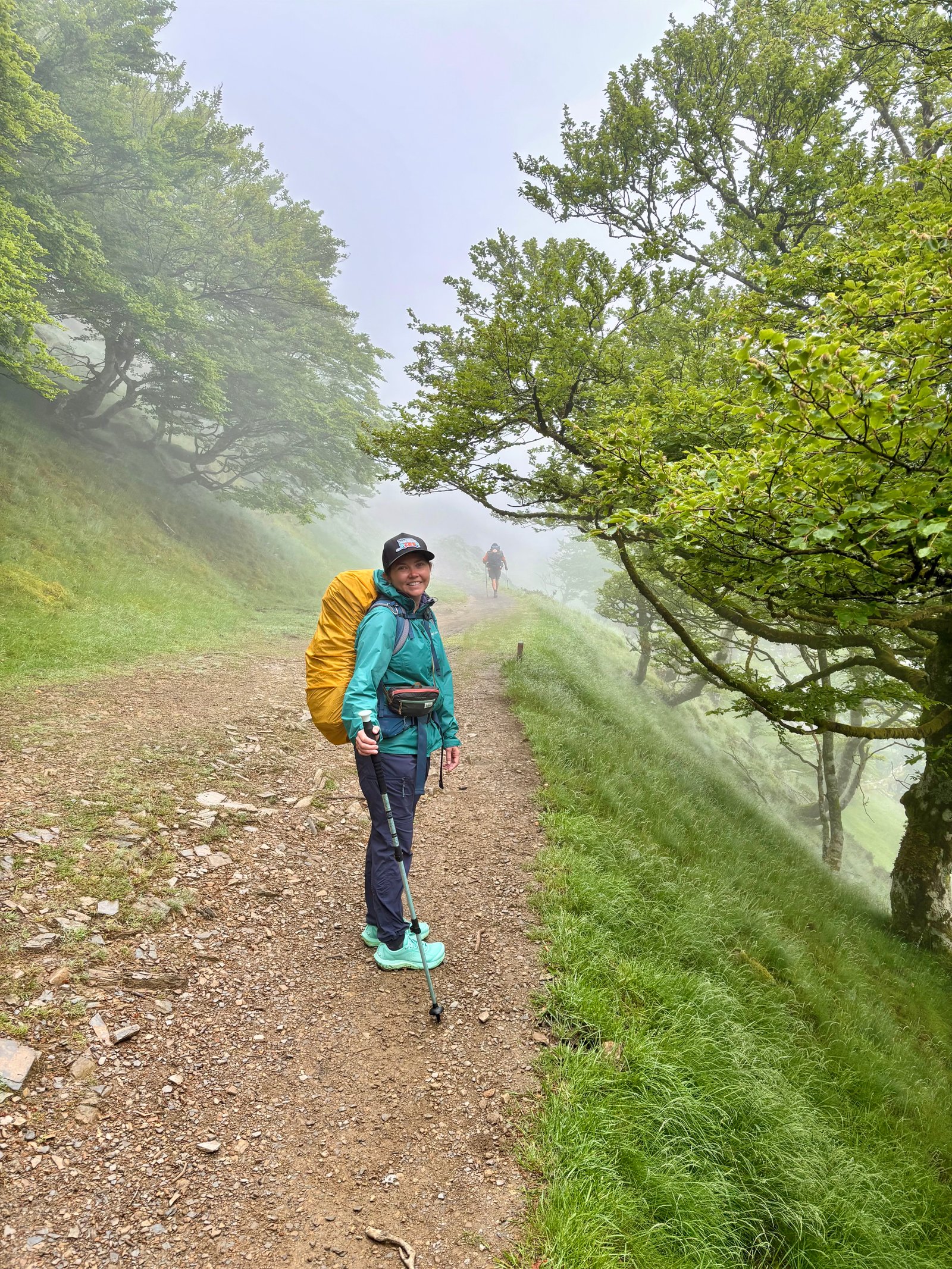
We pushed on, passing another field full of sheep and horses. The path led us through a tree-lined section that felt especially misty and magical.
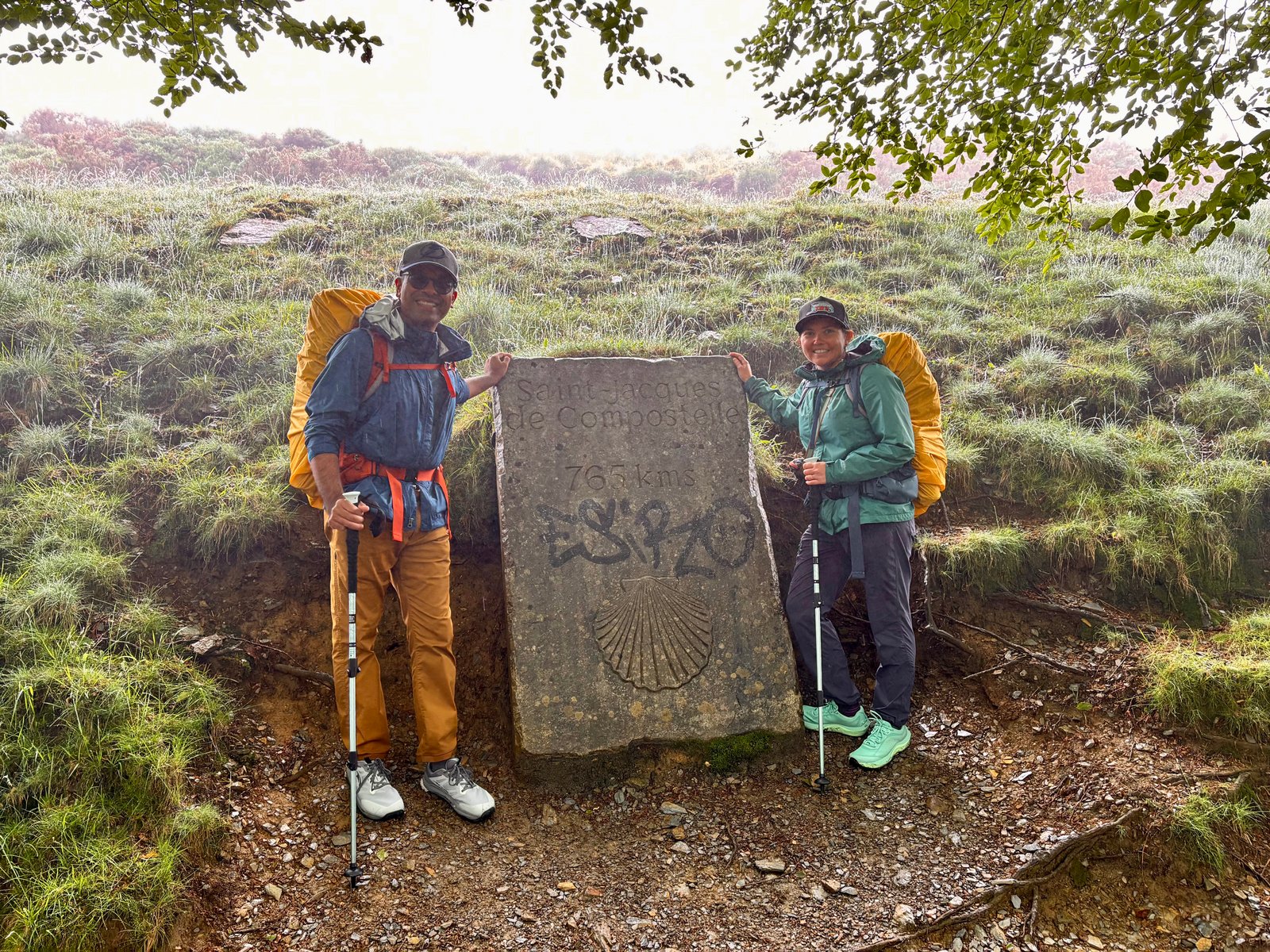
Along the way we passed a stone marker that simply said “Santiago de Compostela 765Km.”
And then, right before the summit, something remarkable happened.
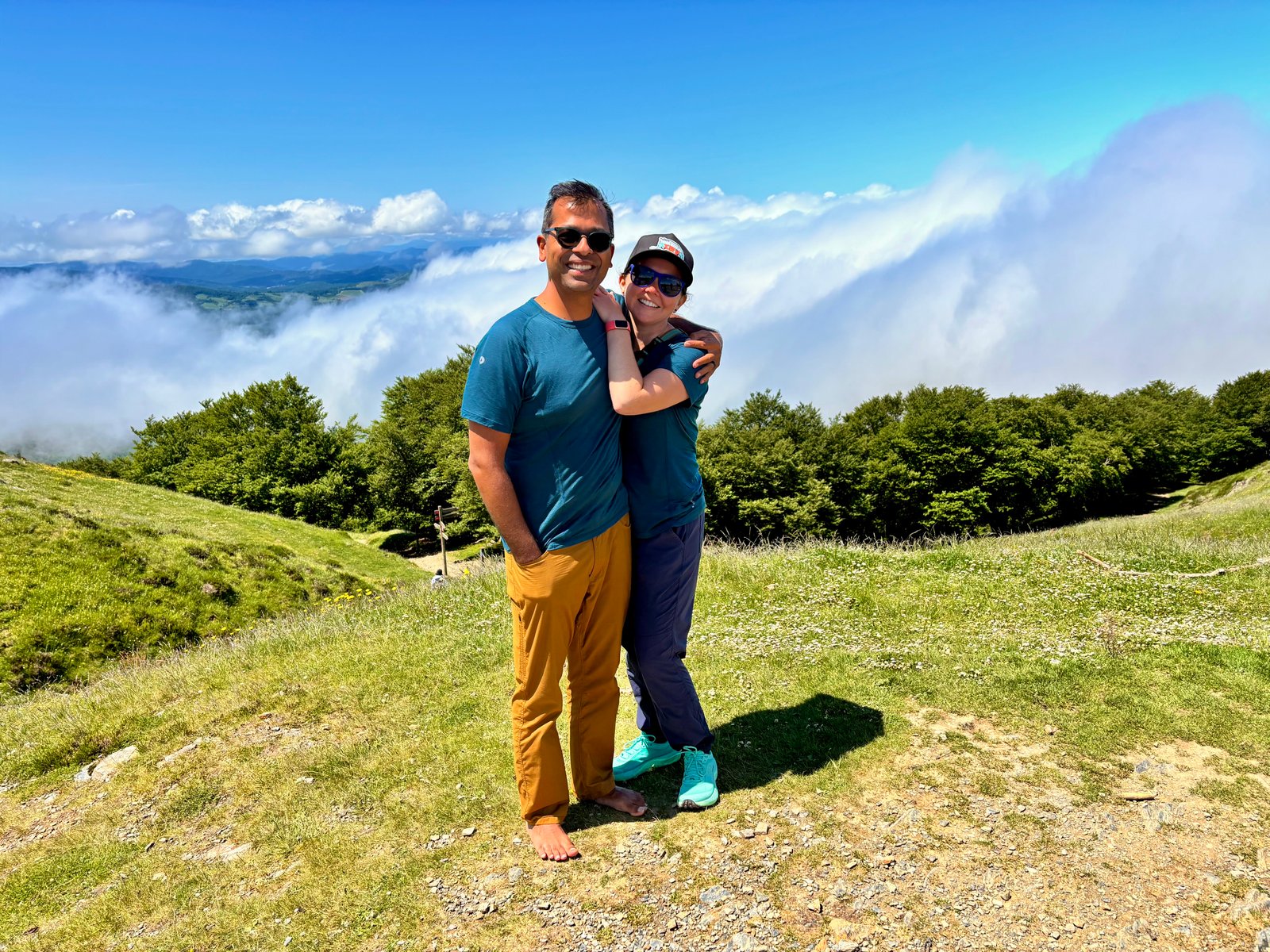
The sky cleared.
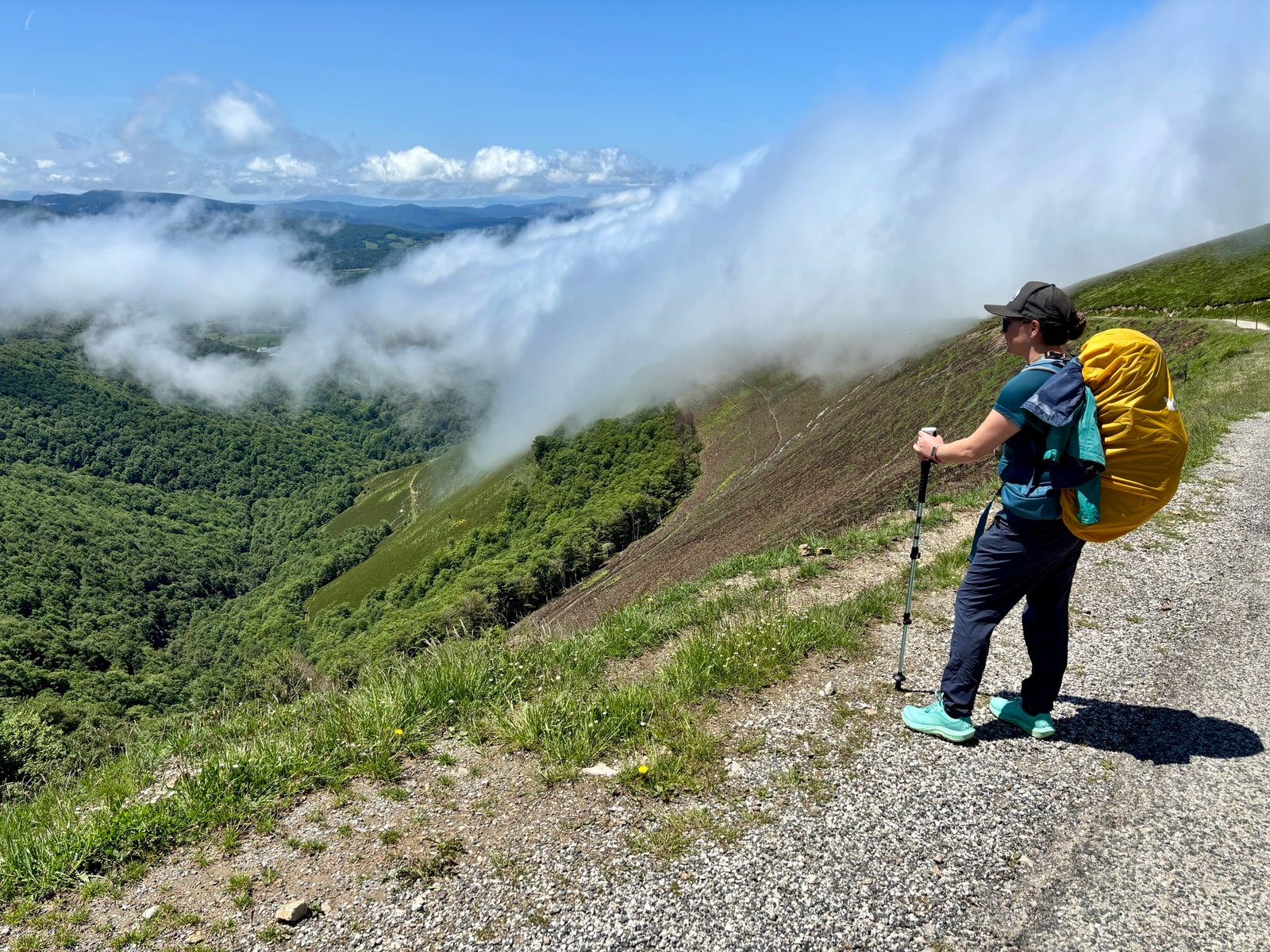
Just like that, as if someone had pulled back a curtain, we found ourselves in brilliant blue sunshine. The guy from New York and his dad had predicted this would happen at the dinner last night, and they were absolutely right.
The Descent Begins

At the top, in glorious sunshine, we began our descent. The pilgrim office had directed us to turn right—good thing too, because we saw a few people heading left, which would have led to the same town but by a much more treacherous roundabout route.
The descent offered amazing views of the valley below and wildflowers everywhere. But after about 20 minutes, we were back in the clouds again.
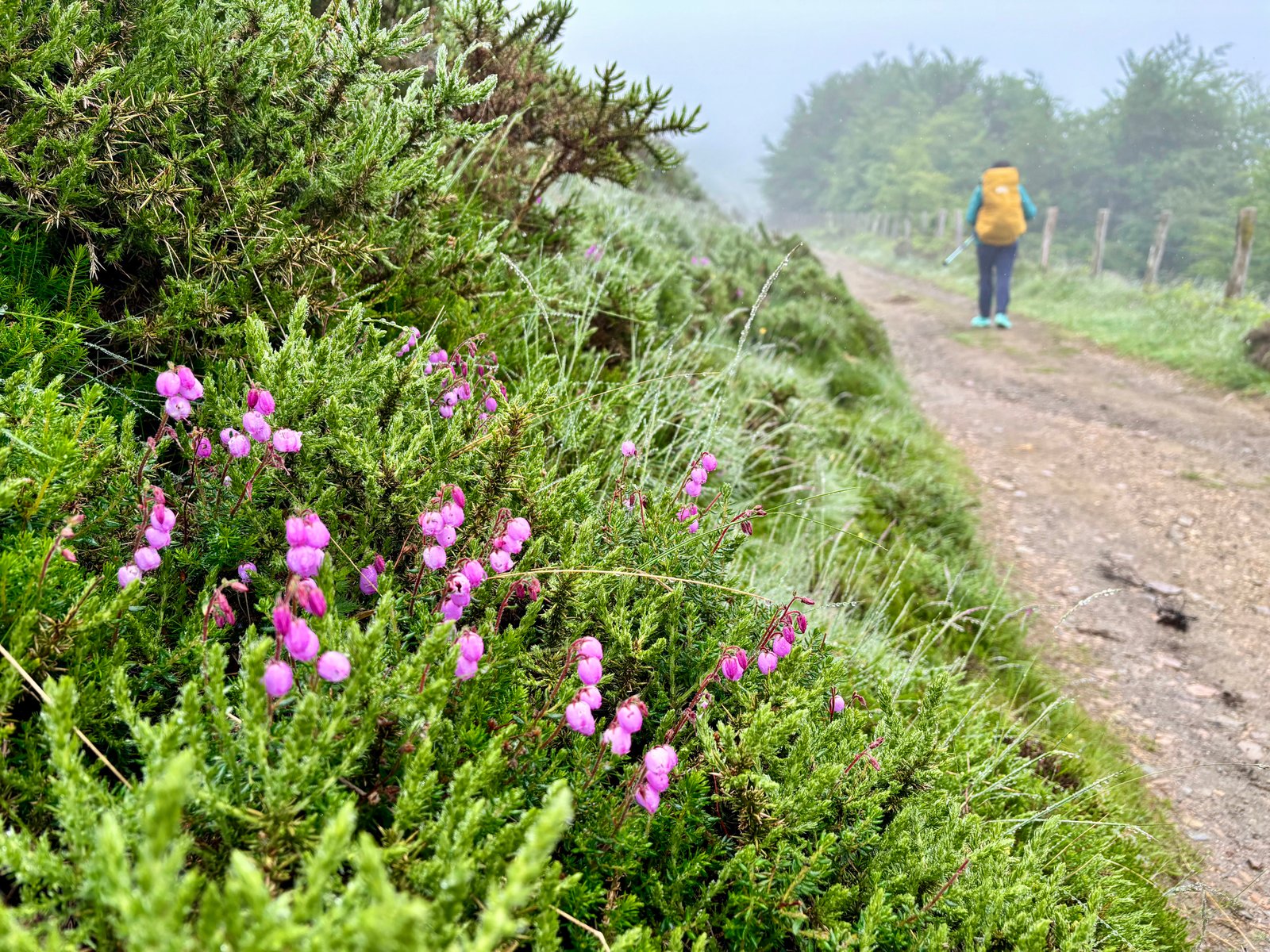
I’d heard from other pilgrims that the downhill would be brutal, but honestly, it wasn’t too bad. Having a walking stick definitely helped. We passed pastures where cows sat grazing peacefully. The trail felt remarkably like hiking anywhere in the U.S.—especially Seattle, with all the moss growing on everything.
Alina from Chicago
Throughout the day, we kept running into Alina, a recent college graduate from Chicago who was about to start a new job in September. She’d carved out this time before her career began to walk the Camino. She was bubbly and enthusiastic, always excited when our paths crossed. It’s funny how you start recognizing the same faces day after day out here.
Roncesvalles: A Monastery Steeped in History

After following a straight dirt path, we arrived at a beautiful monastery. Roncesvalles holds special significance for pilgrims. After crossing the Pyrenees, this monastery marks the gateway to the final stretch of the Camino—despite the fact that more than 700 kilometers still remain to Santiago de Compostela.
Pilgrims consider it the second most important point on the entire Camino, behind only the Compostela Cathedral itself, due to the historical and symbolic power of the town’s artistic treasures.
At the time of our visit, the monastery was staffed by volunteers from the Netherlands, carrying on centuries of tradition in welcoming weary pilgrims.
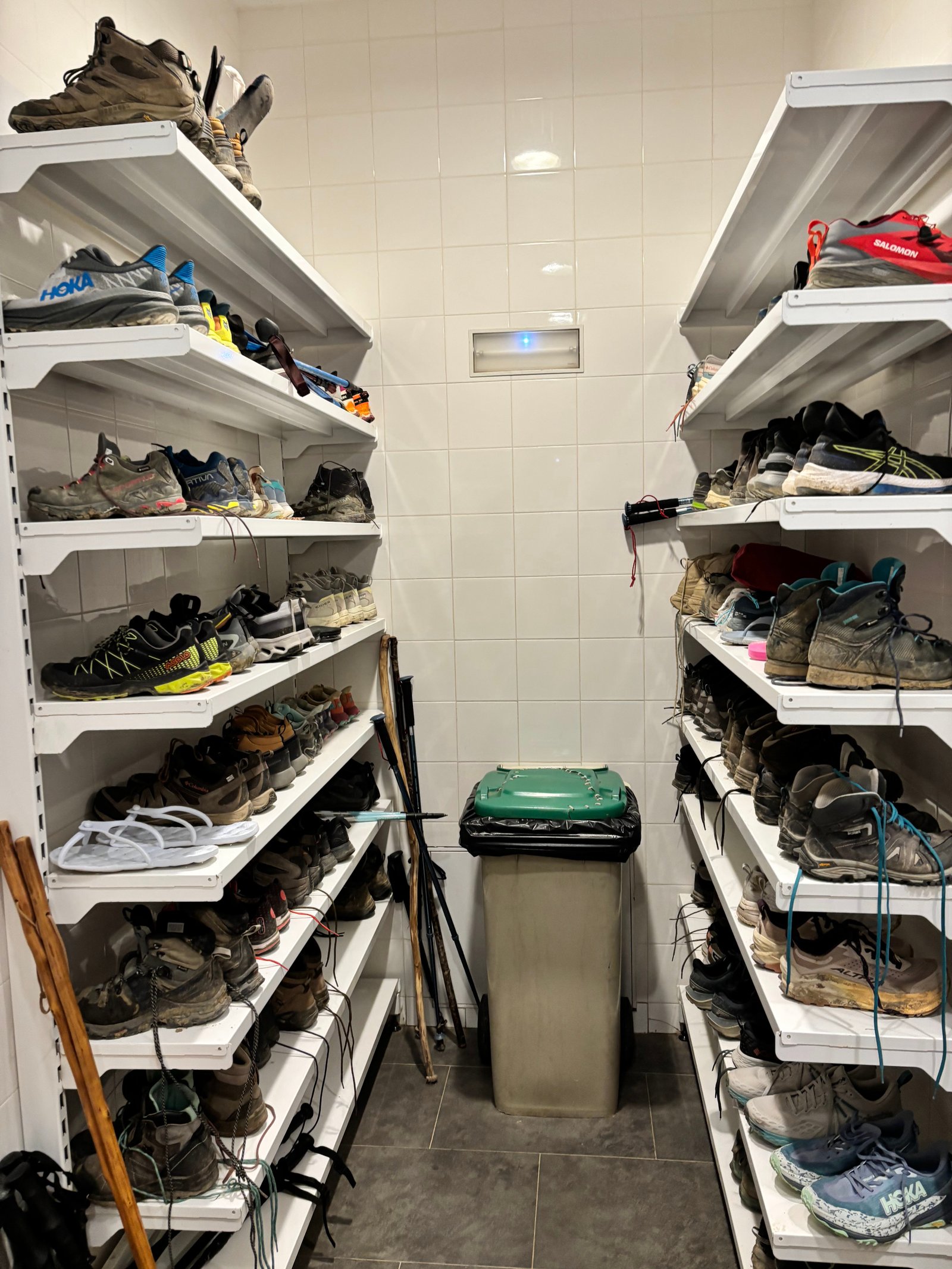
We checked in, received our bed numbers, and were shown where to leave our shoes. And boy was the room of shoes a sight to behold. All kinds of brands and types but almost all of them caked with mud. An interesting observation: the shoe room didn’t have any shoes that matched the brand we were wearing. It seems we were the only ones with our particular footwear choice.
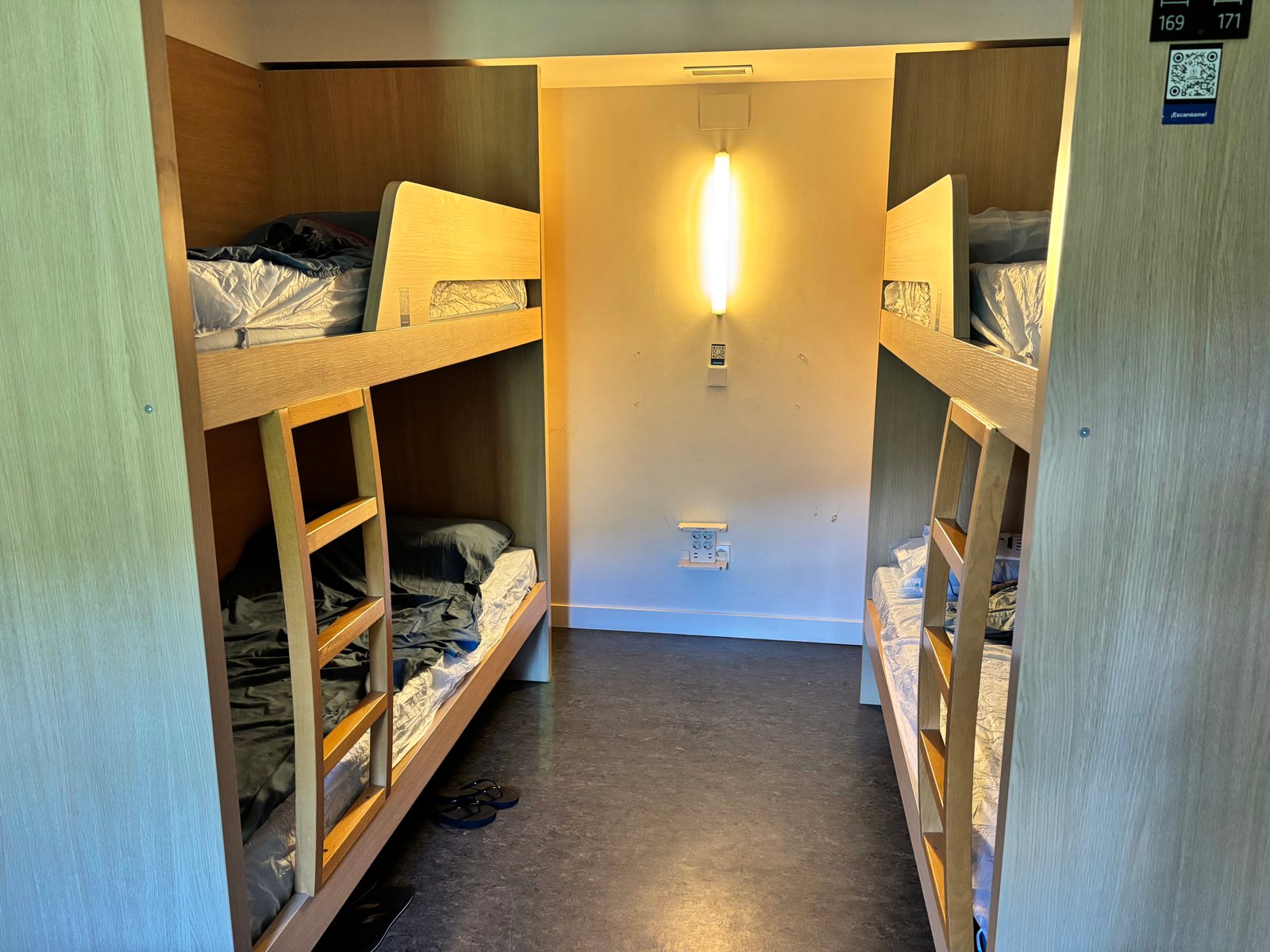
Upstairs, we found our assigned bunks—top and bottom beds with neighbors from Mont-Saint-Michel. This was a big albergue with 138 beds, but the beds were surprisingly comfortable.
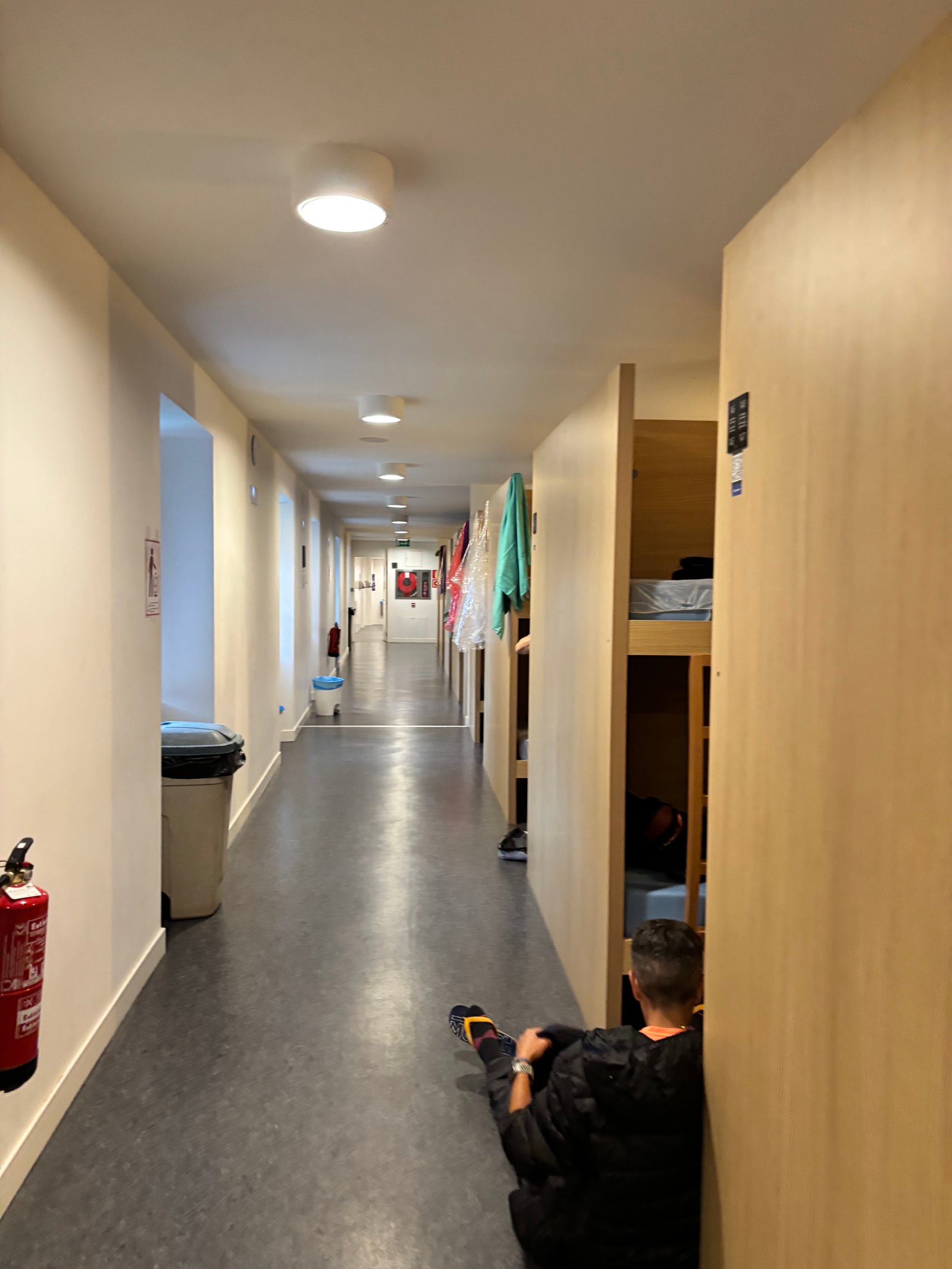
The shower was wonderful—hot water, unlimited time, a luxury we’d already learned not to take for granted. Afterward, we did laundry and hung it behind the monastery to dry as by then the sun was out in full glory.
The Giant King and the Battle
With time before the 6 PM service, we explored the monastery grounds. I spent €3.50 to see something truly remarkable: King Sancho VII’s grave and the Las Navas stained glass window.
King Sancho VII “the Strong” is the most famous Navarrese king, known for his heroic role in the Battle of Las Navas de Tolosa in 1212—one of the most important battles of the Reconquest and Spanish history. Pope Innocent III had called it a crusade.
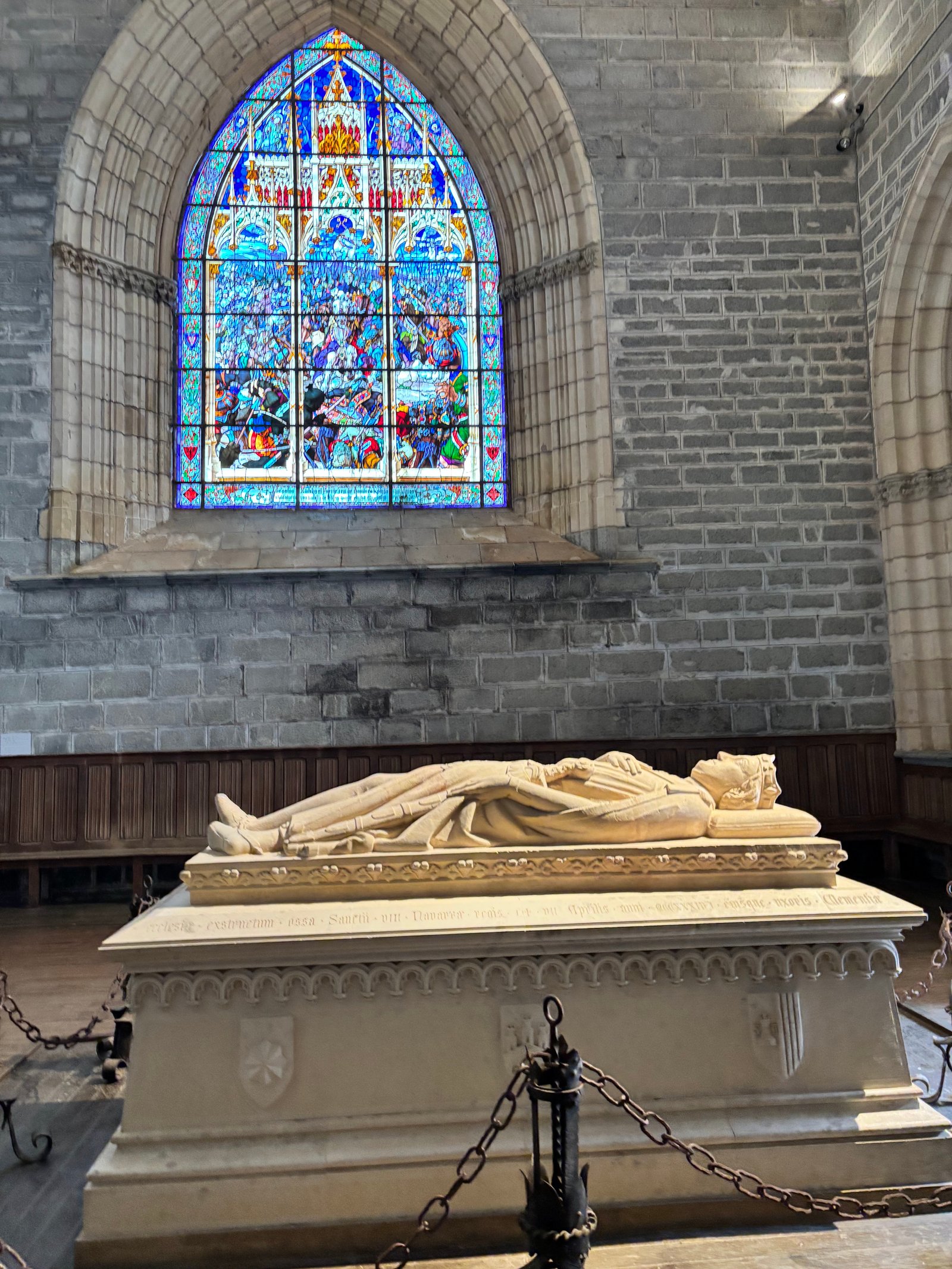
In the center of the chapter house stands a 13th-century statue of him. The statue’s great size reminds visitors that the king stood more than two meters tall—a true giant in his time. They call him the Giant of Las Navas.
The stained glass window is absolutely spectacular. Created by the prestigious Maumejean house in 1906, it depicts Sancho the Strong and his Navarrese warriors charging against the guard of Miramamolin Al-Nasir, the king who led the Almohad troops in battle.
What makes this 6 x 4 meter masterpiece unique is its perspective: it puts the viewer in the Miramamolin’s place. We see the Navarrese attack through the eyes of the Almohad caliph—an unusual point of view among artworks depicting battles.
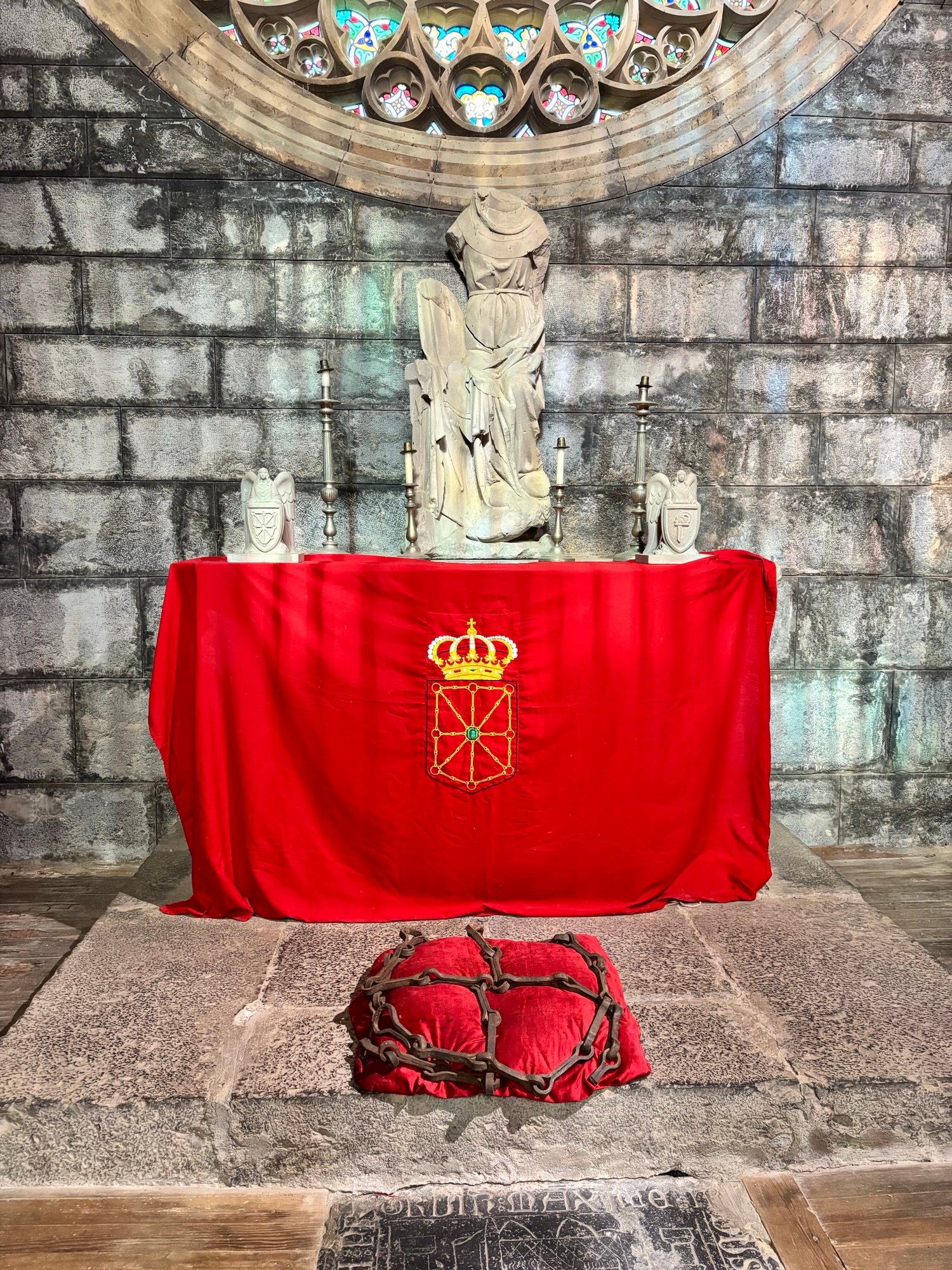
Behind the chapel gate, you can see one of the sections of chain from the Battle of Navas de Tolosa. The Almohad king’s guards, called the imesebelen, were tied to these chains. They became trophies of war and now form part of Navarra’s coat of arms.
Dinner and New Friends
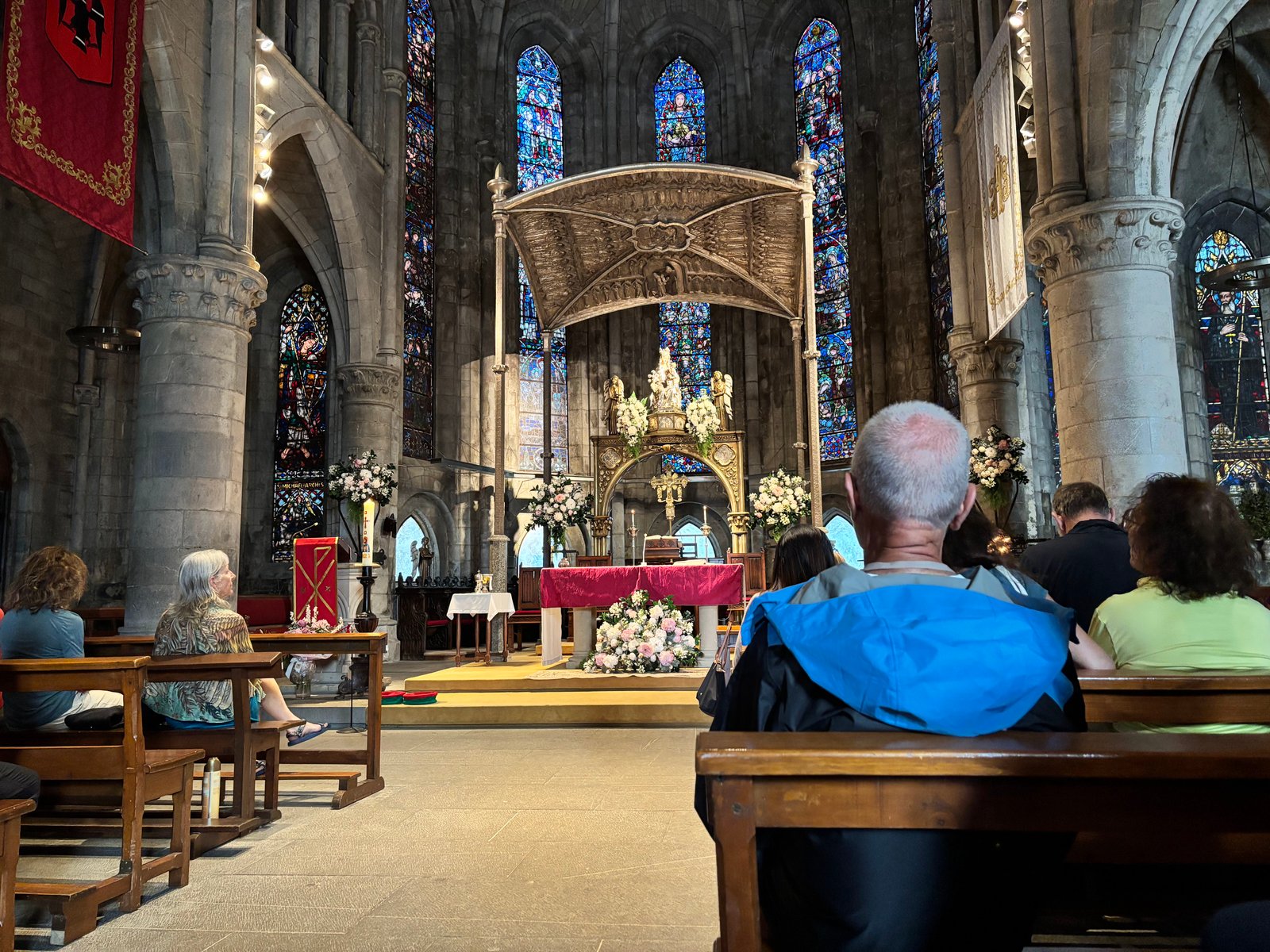
The service was interesting as, unsurprisingly, it was all in Spanish. We understood very little but felt at peace. After the service, our dinner was next door at Hotel Roncesvalles. I had pasta, trout, and crumble cake. Ashley ordered pasta, pork, and crumble cake. We sat next to the same couple from Leon we’d met at Orisson—the husband had saved up an entire year of vacation for this journey. His wife had done a route in France, and they’d been eager to walk the Camino together.
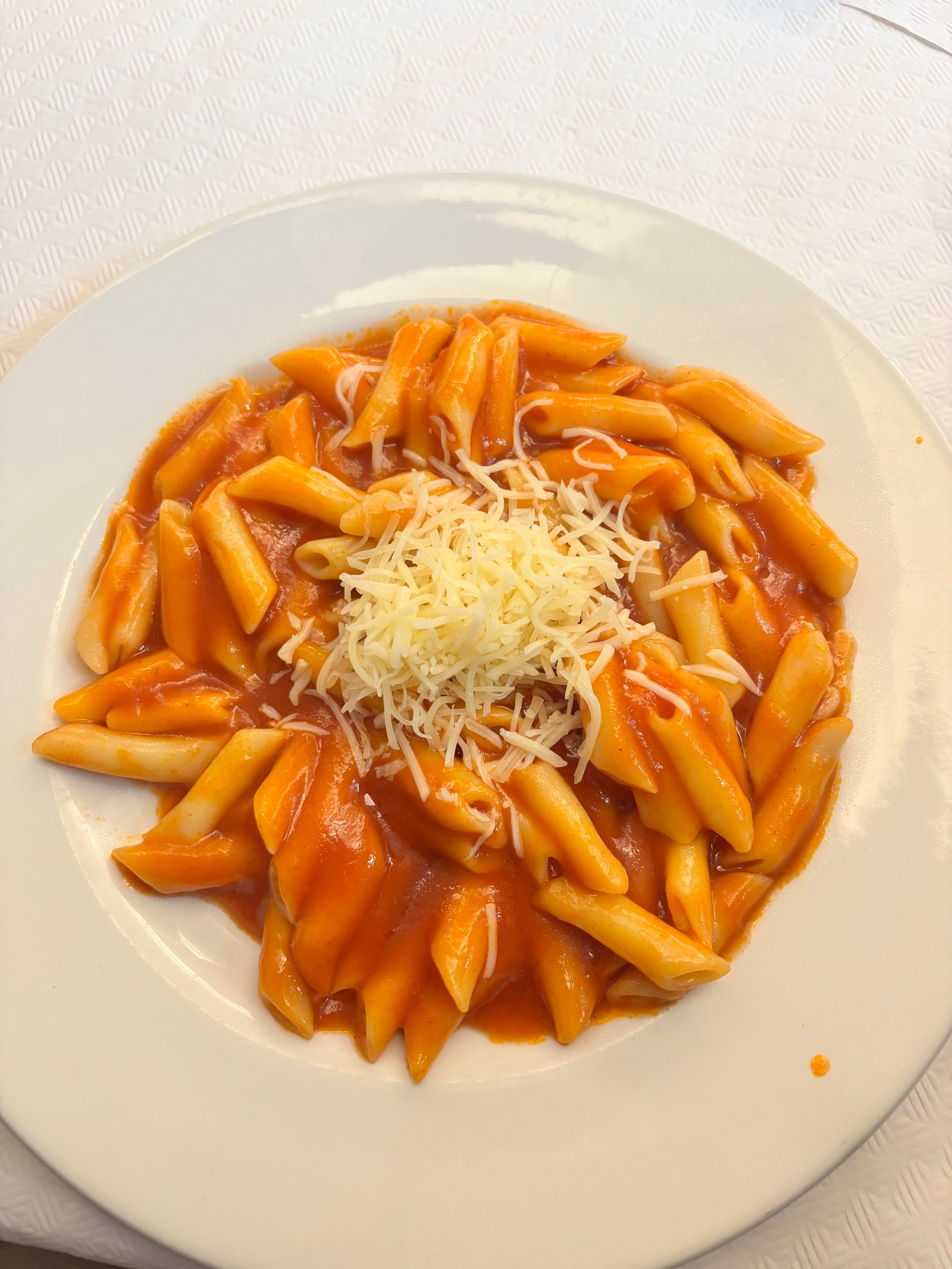
Our other tablemates were a father and daughter from Ohio. The father had retired from the Air Force and had completed the Appalachian Trail before. The daughter laughed when asked why she was there—she honestly didn’t know!
The wine came from the Navarra region and was excellent.
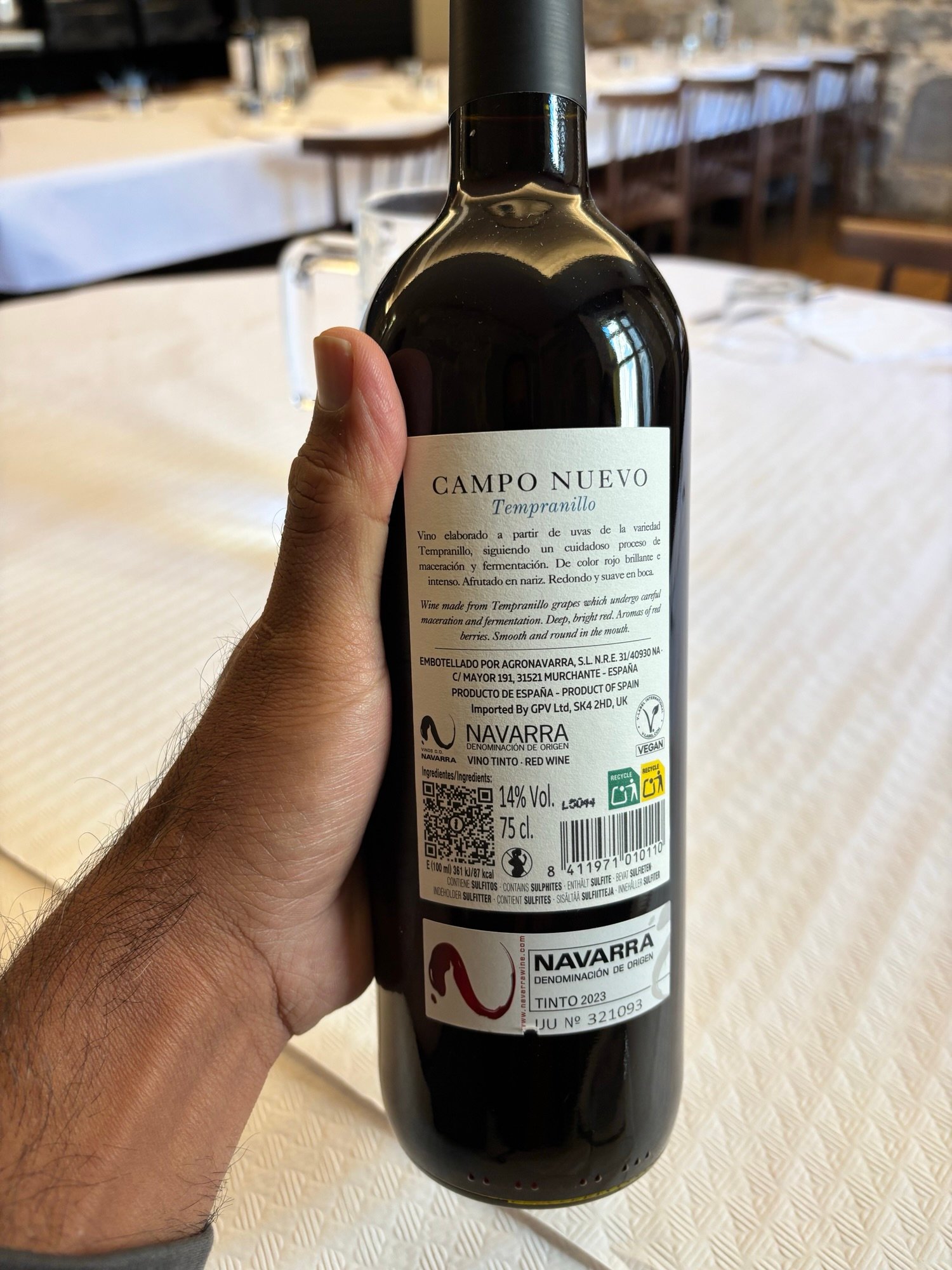
We were exhausted from climbing up and then down the Pyrenees so it was off to bed for us. Tomorrow awaited for our first full day of walking in Spain!
Elevation: 1,400m (summit) to 952m (Roncesvalles)
Distance: Approximately 21 kilometers
Walking time: 6-7 hours
Weather: Misty, then sunny, then misty again—just like life


