

June 10, 2025
Hemingway, History, and the Art of Slowing Down
The day started slowly—gloriously, luxuriously slowly. After days of pre-dawn alarms and monastery bells, we woke at 9 AM. Nine full hours of sleep! Our bodies had been begging for this rest, and we finally listened.
The Hunt for Churros
We got up, ate the bananas we’d bought the night before, and grabbed café con leche and cappuccino in the hostel area. Our mission: find churros for breakfast. To get there, we walked down the very street where the bulls run.
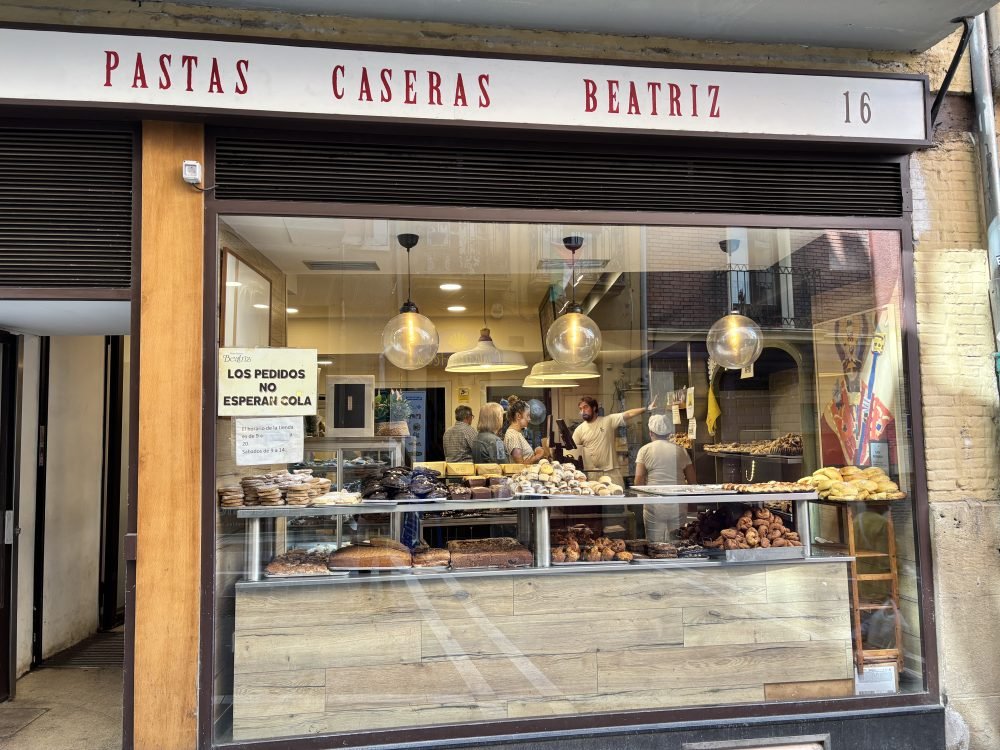
When we arrived at the churros place, disappointment: it was closed. Not surprising—many reviewers had warned that they kept random hours and closed unpredictably. Around the corner, we discovered an amazing bakery with delicious treats, including chocolate-filled croissants and cream-filled doughnuts. As we exited, we (again) ran into the two Korean sisters we’d been crossing paths with since St. Jean. It made us happy every time we ran into them.
We grabbed coffee nearby and took our treats to the base of the Santa Maria Cathedral to enjoy them properly. We spent a few minutes planning our next steps, including booking tomorrow’s hostel. Then we decided a drink was in order.
Café Iruna: In Hemingway’s Footsteps
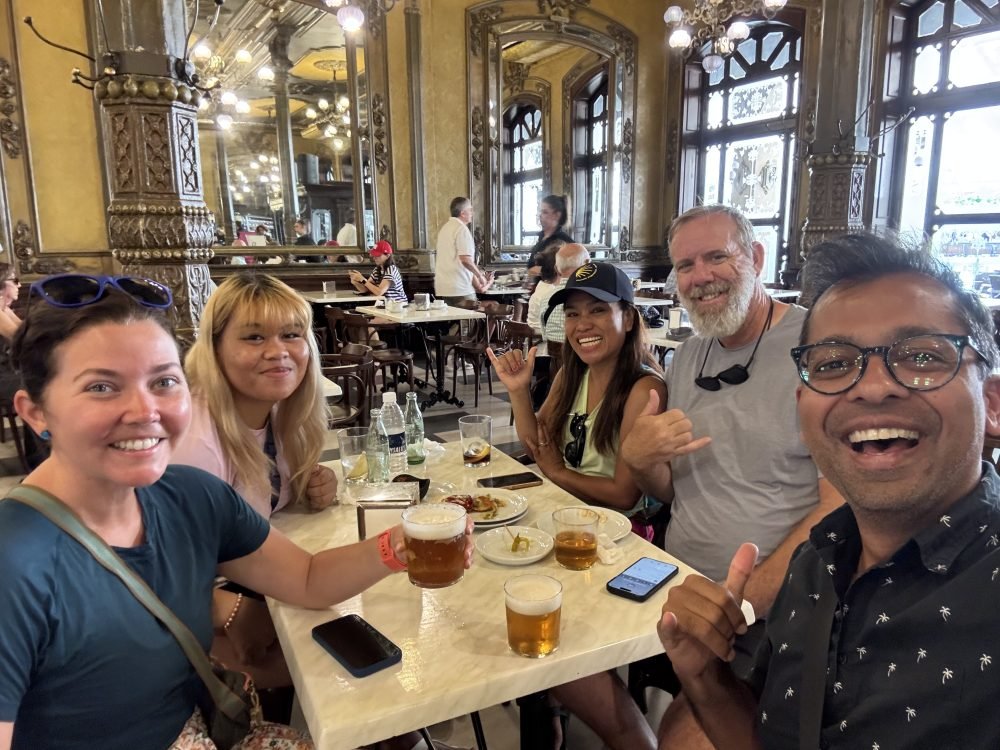
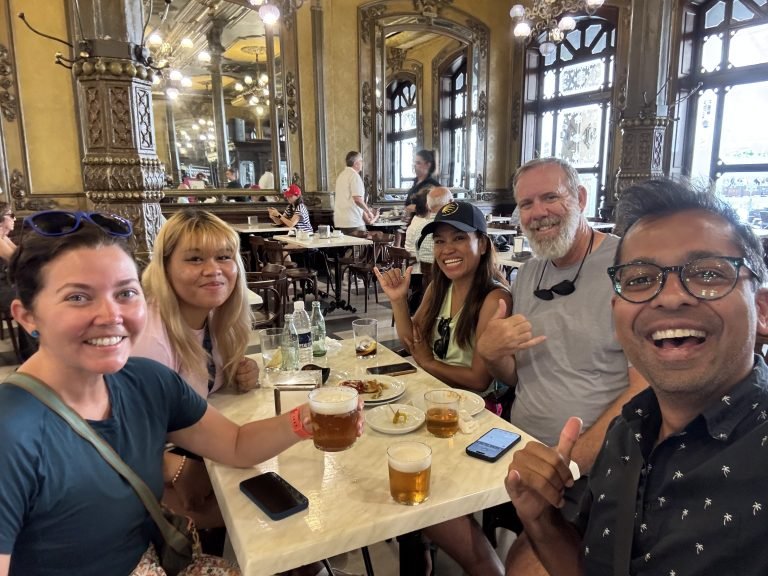
We were very near Café Iruna, famous as one of Hemingway’s hangouts during the running of the bulls. It is said that this very cafe was used as a meeting point for the characters in Hemmingway’s favorite novel The Sun Also Rises. When we walked in, we ran into the family from Hawaii, who graciously invited us to join them. We ordered two very cold beers and settled in for good conversation and catching up.
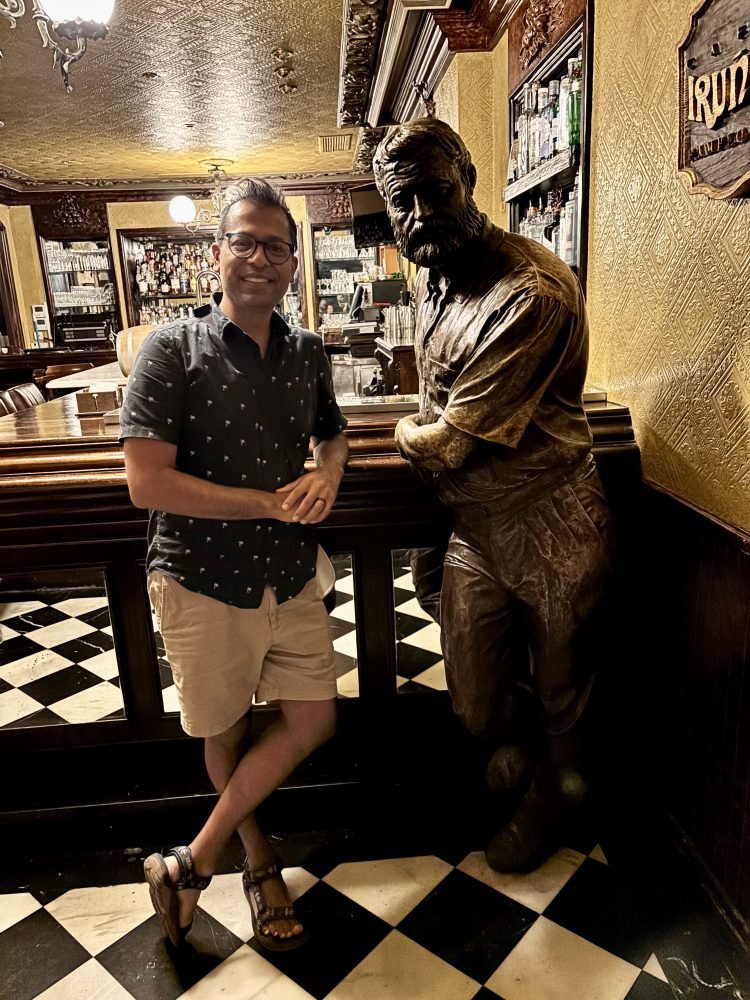
We also checked out the back bar where Hemingway had enjoyed many drinks back in the day. Leaning on the bar is a life-size sculpture of Hemingway welcoming the visitor.
The Cathedral: Kings, Queens, and Crypts
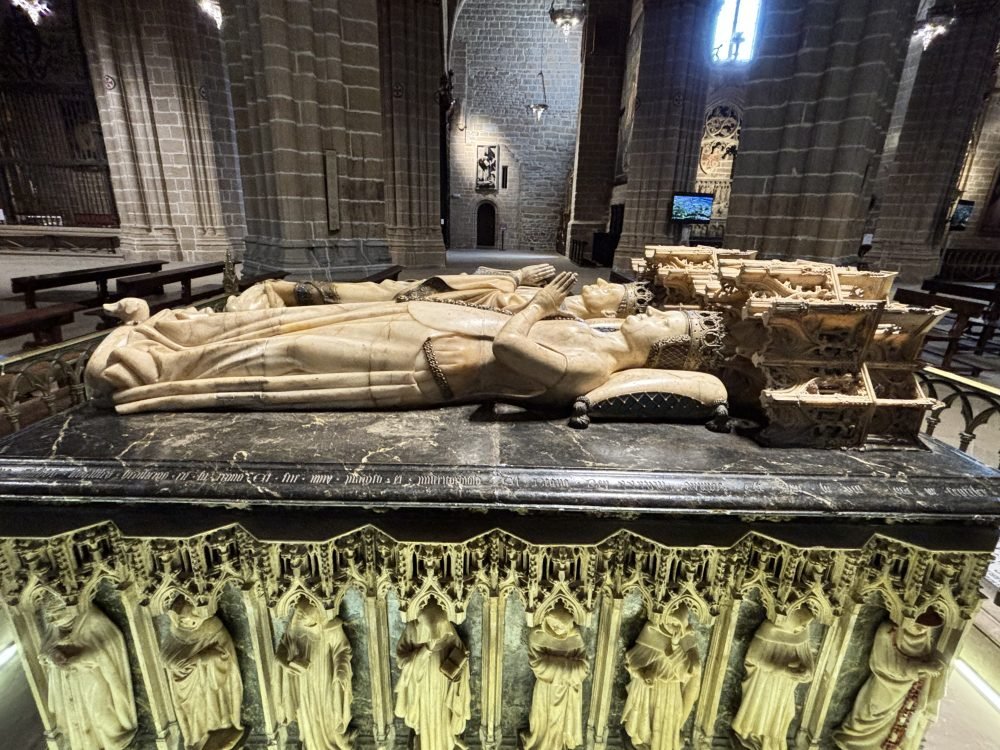
After our drinks, we headed to the Cathedral of Pamplona and spent a solid ninety minutes exploring. The Cathedral of Pamplona was fascinating—filled with chapels, with the main attraction being a king and queen buried in the center.
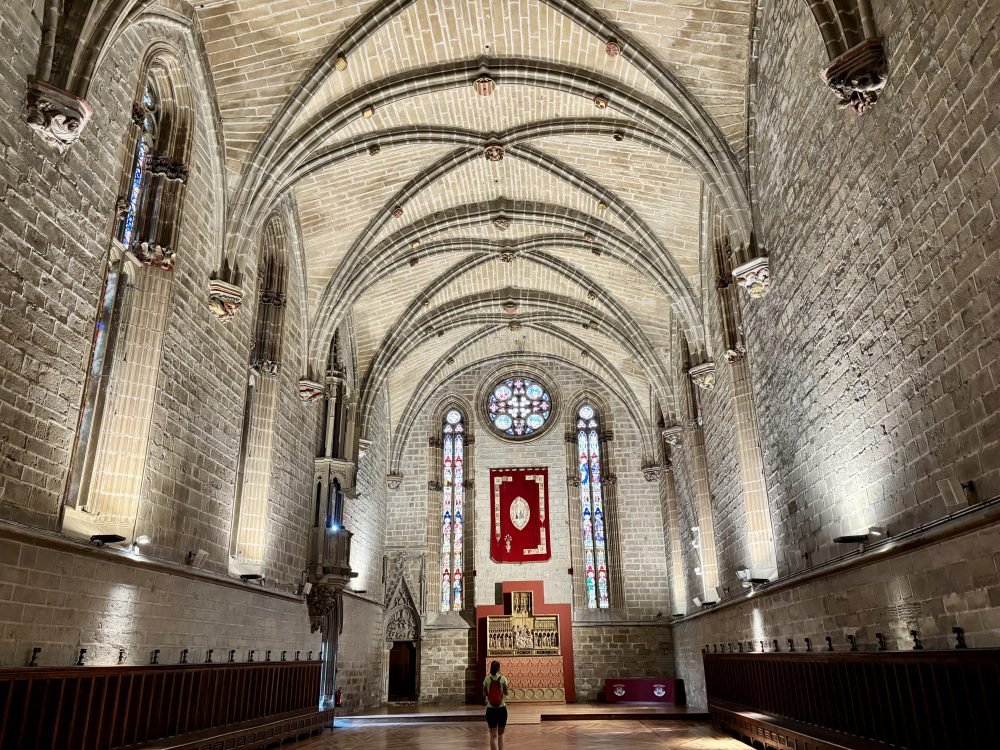
We also ventured into the crypt, which was beautiful in its own right. The museum housed archaeological artifacts from when the church was originally built in the 900s.
Practical Matters and City Supplies
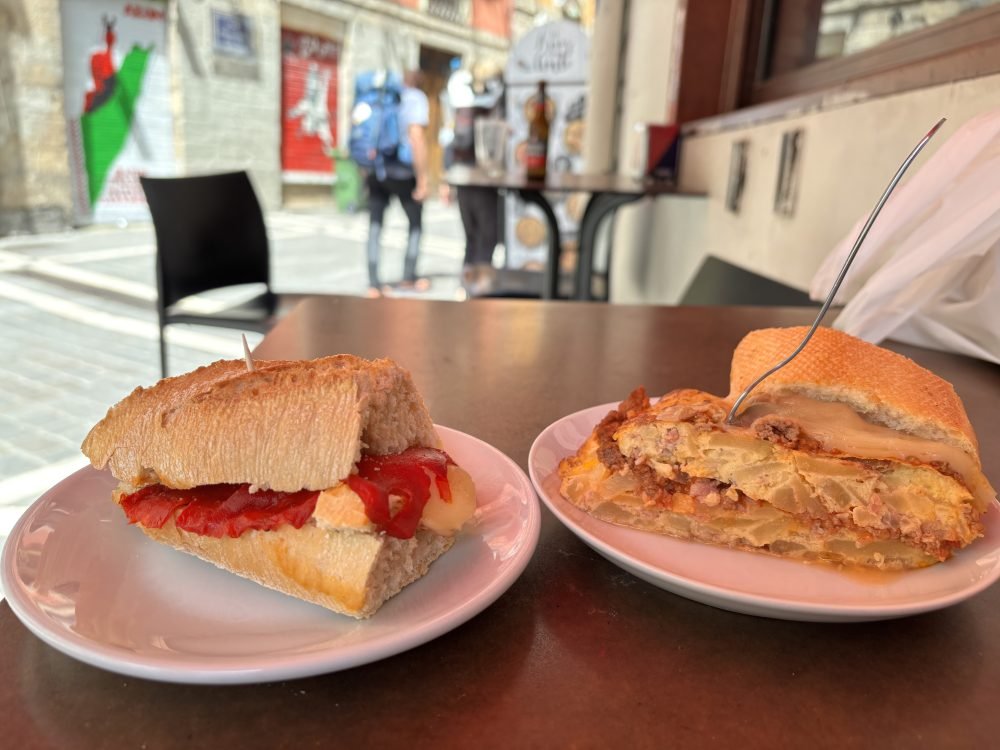
We grabbed a late lunch at a tortilla place: a Bolognese tortilla and a sandwich with red pepper, cheese, and ham. Then we headed back to the hostel to relax, do some laundry, and pack for the next day.
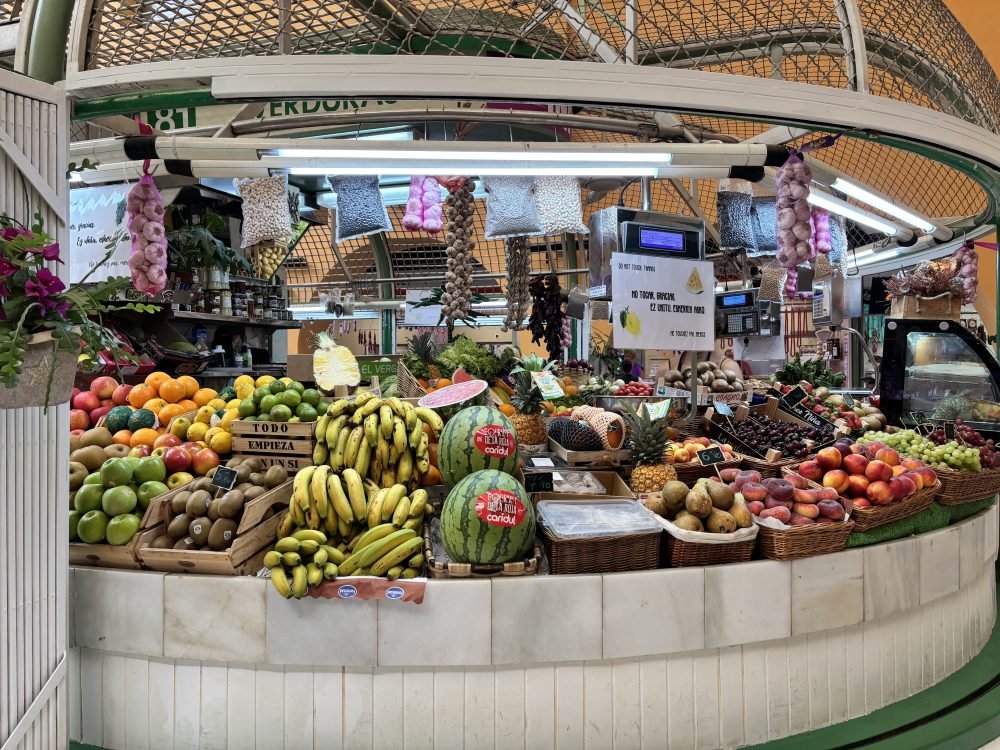
Since Pamplona is a big city, it’s the perfect place to stock up on necessities. We stopped at a supermarket and bought a gorgeous box of strawberries grown in Spain, two bananas, a bottle of water, and some snacks.
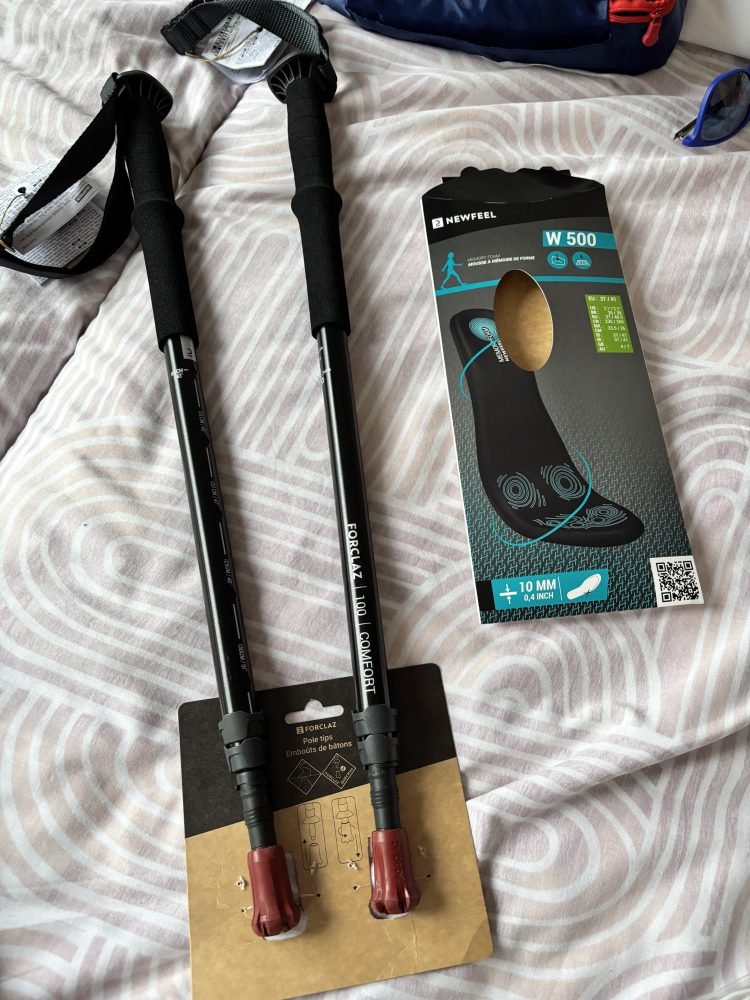
After returning to the hostel with the supplies, Nisheet headed out to the sporting goods store Decathlon to pick up extra hiking pole rubber tips and insoles. By now, we were convinced that having a pair of hiking poles with good rubber tips was essential for each of us to continue our Camino.
A word to the wise: if you need any sporting goods during your Camino—quick drying clothing, wool socks, hiking poles, tips, insoles—go to Decathlon, not Camino Tecca. Decathlon’s prices, options, and quality are much more reasonable and closer to U.S. prices.
The Pilgrim Walking Tour
At 6 PM, we met in front of the town square for a walking tour designed specifically for pilgrims. It was wonderful.
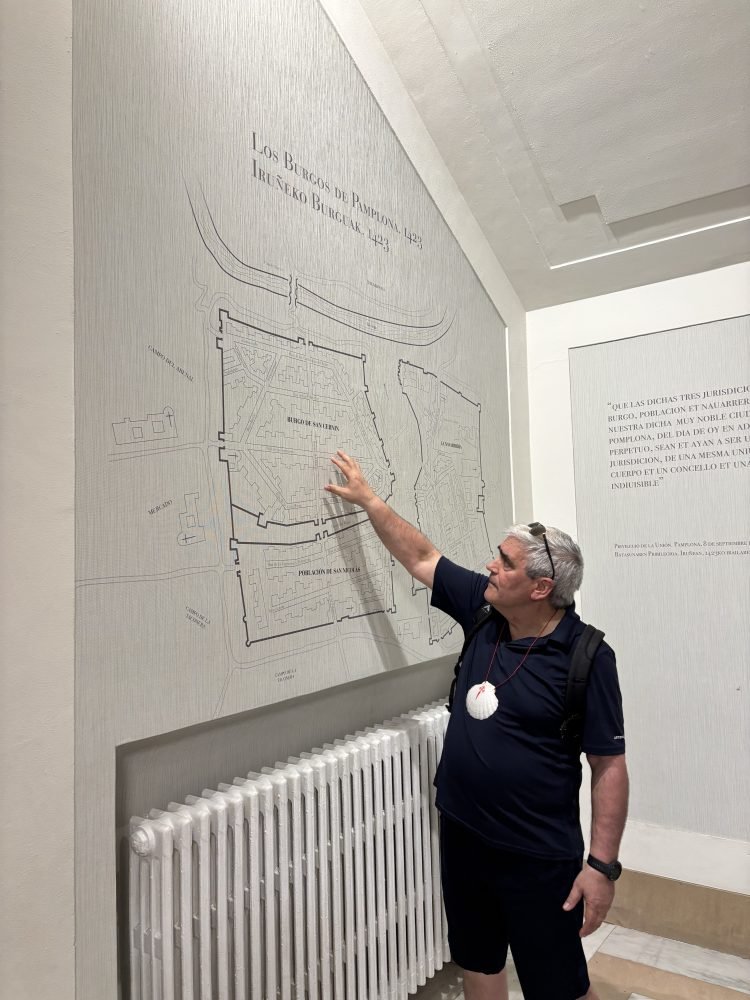
Our guide explained that Pamplona used to be three separate towns divided by walls. The mayor eventually decided to knock down the middle walls and unite them into one city. We learned about its history as a Roman town, its invasion by the Muslims, and their eventual overthrow.
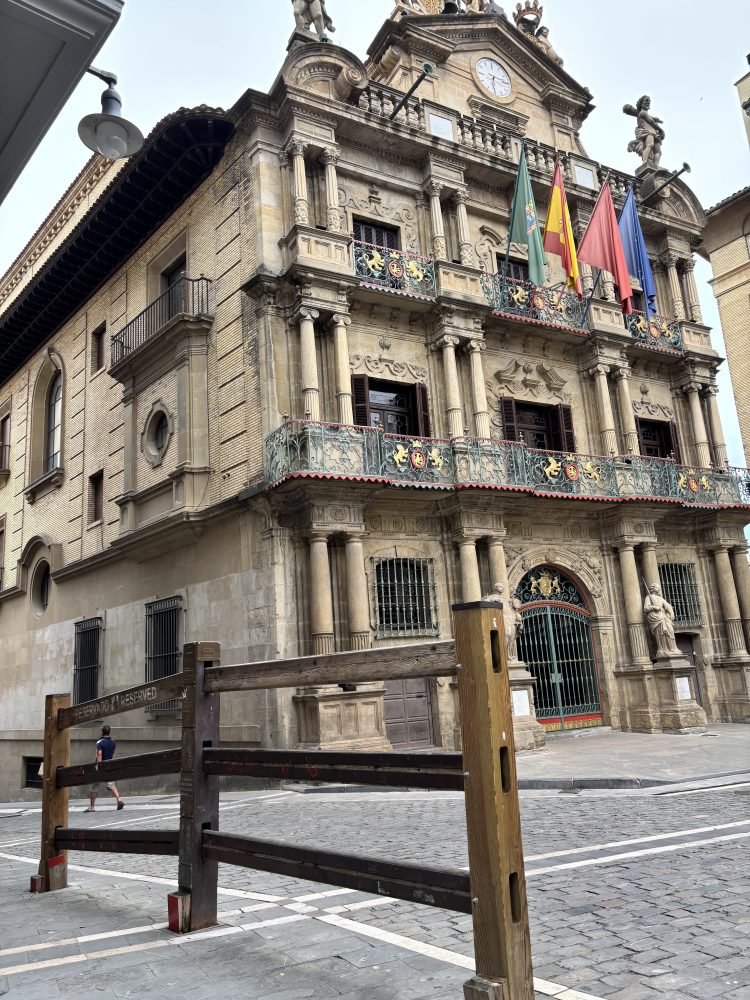
The tour guide showed us exactly where the running of the bulls happens. The festival lasts eight days, with six bulls running each day. It begins when the mayor launches a rocket from the second story of the city building (shown behind the running of the bulls barrier in the above photo). He pointed out the barriers—two parallel rows where only police and photographers are allowed to stand in between. There is usually a heavy amount of drinking involved with participants (and audience) basically staying up all night until the bull running starts the next morning. I can imagine needing some (or a lot of) liquid courage to run in front of a 2000 lb (900 kg) beast that is mad as hell.
Cathedral of Saint Saturnin: Heaven, Earth, and Hell
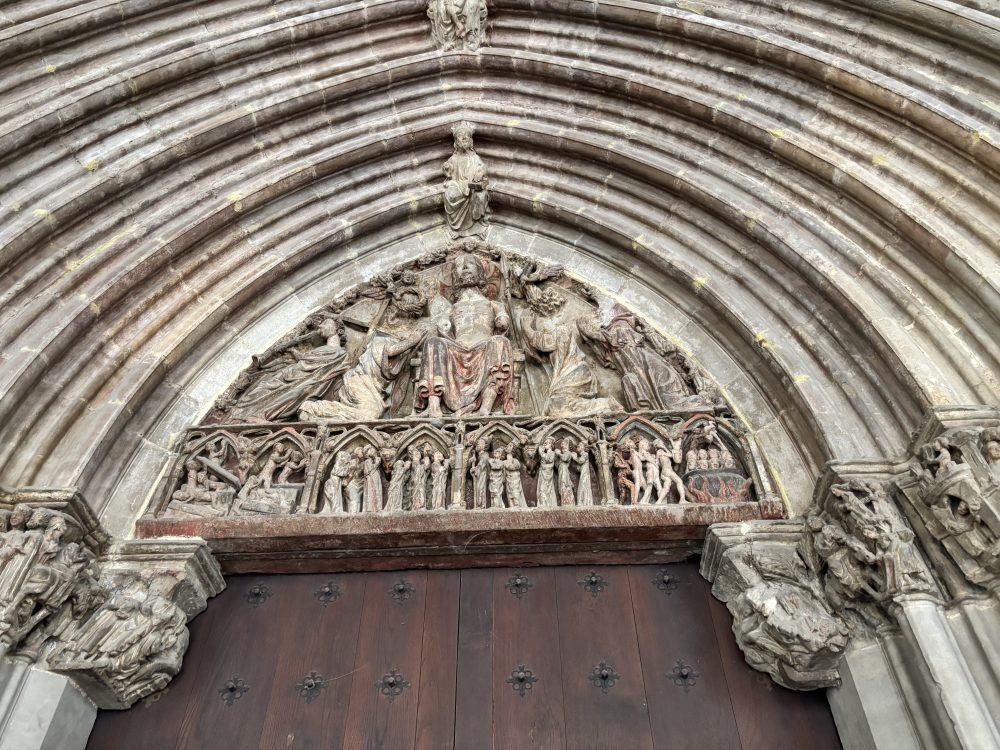
We stopped at the entrance of Saint Saturnin Cathedral, where our guide explained the remarkable carvings above the door. They tell a complete story:
- Left side: People emerging naked from graves (resurrection)
- Center: Everyone dressed nicely, partying (earthly life and celebration)
- Right side: People screaming and naked, descending into a burning cauldron (damnation)
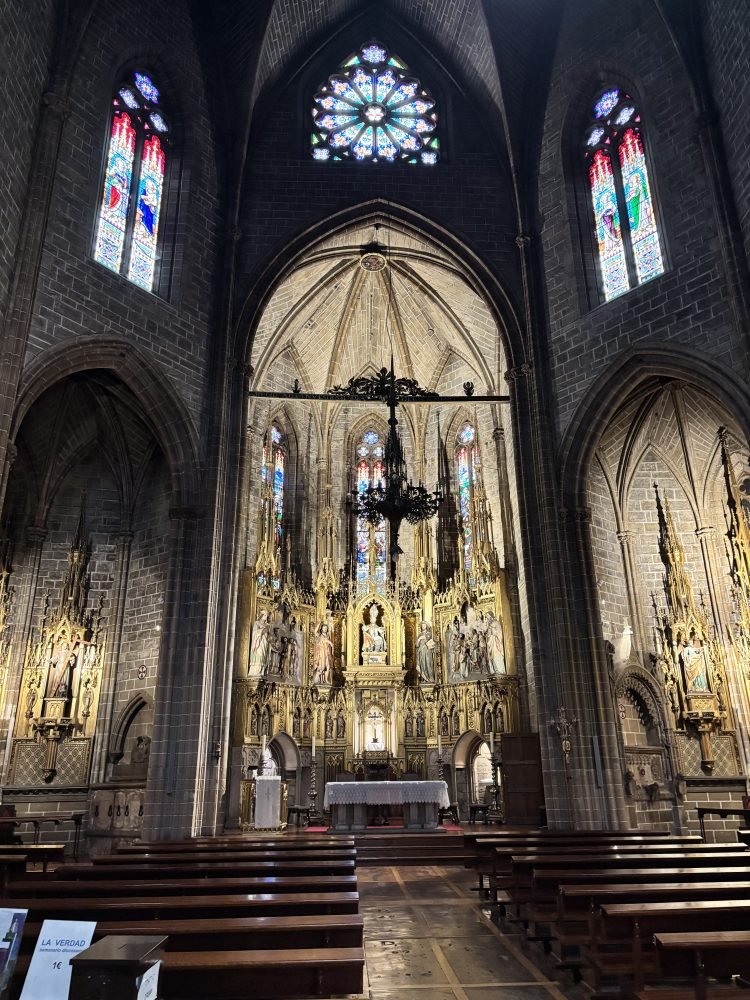
Inside, it was amazingly cool. I joked that they must have air conditioning, but was quickly corrected—it’s naturally cool because of the cathedral’s thick stone walls. Astonishing medieval engineering.
On the floor, we saw several numbered panels. It turns out people wanted to be buried as close to the church as possible. When space ran out, they had to remove the remains from the ground, but they left the numbered panels in place.
Evening Pintxos with the Hawaii Family
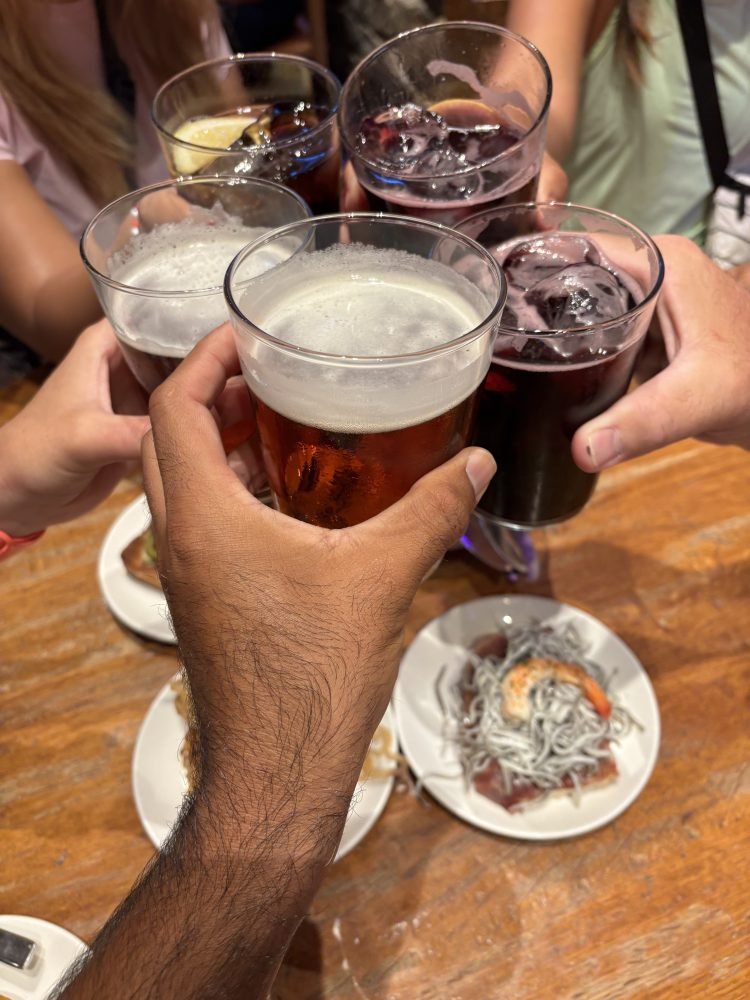
We ended the evening at La Mandarra de La Ramos with the Hawaii family, sampling an array of pintxos:
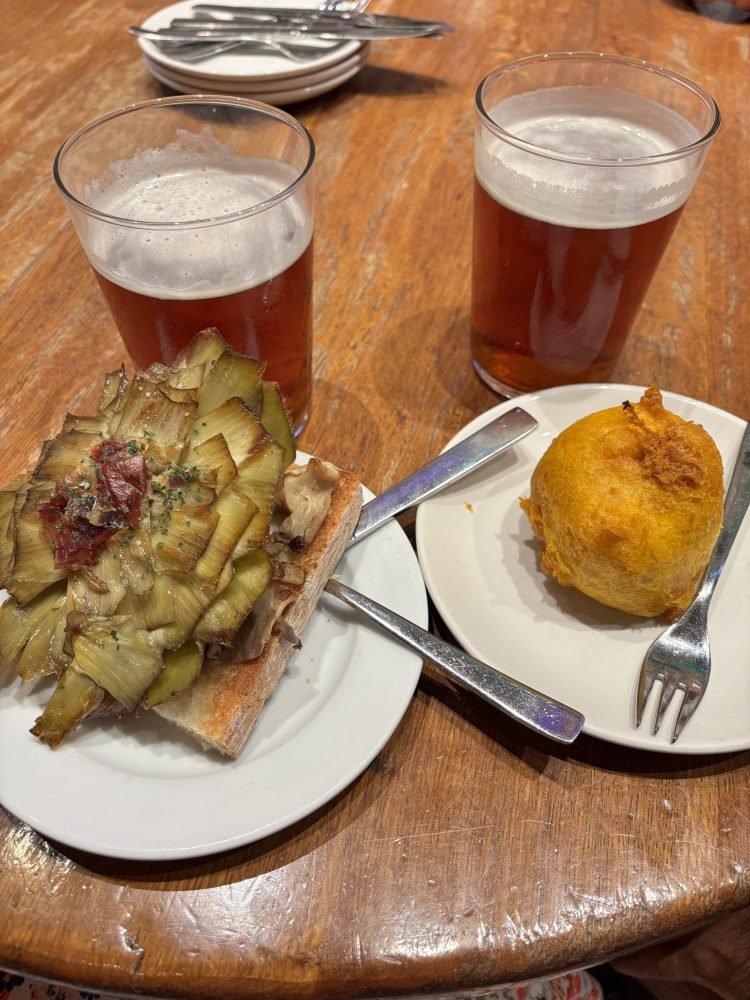
Pintxo Alcachofa (artichoke)
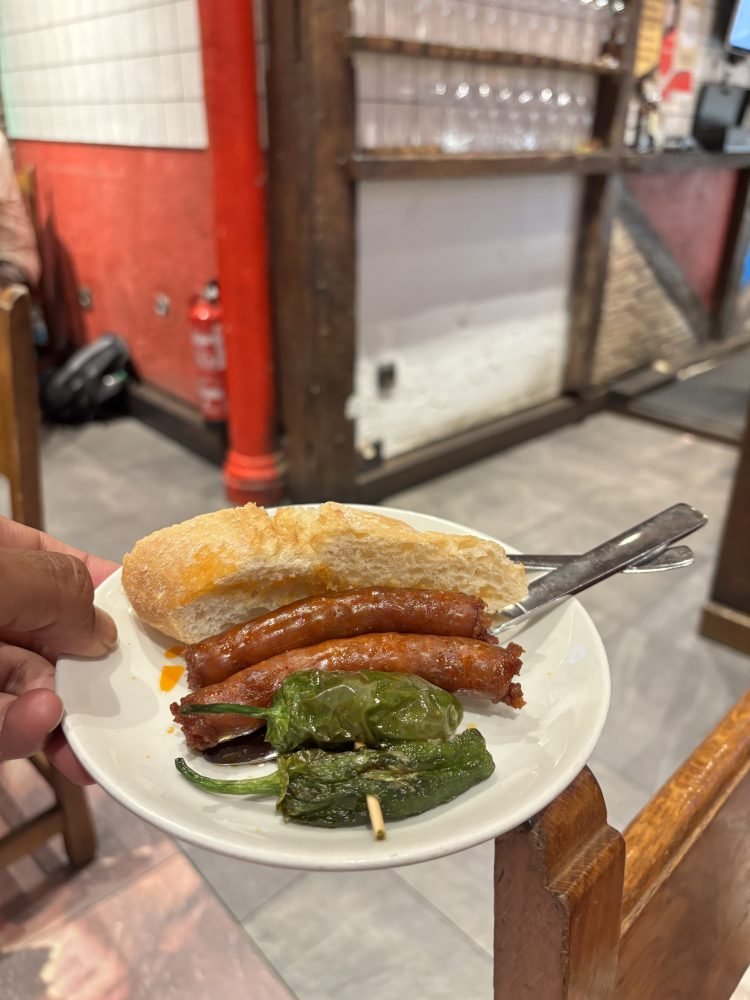
Pintxo Pimiento (pepper) and Pintxo Txistorra (Basque sausage)
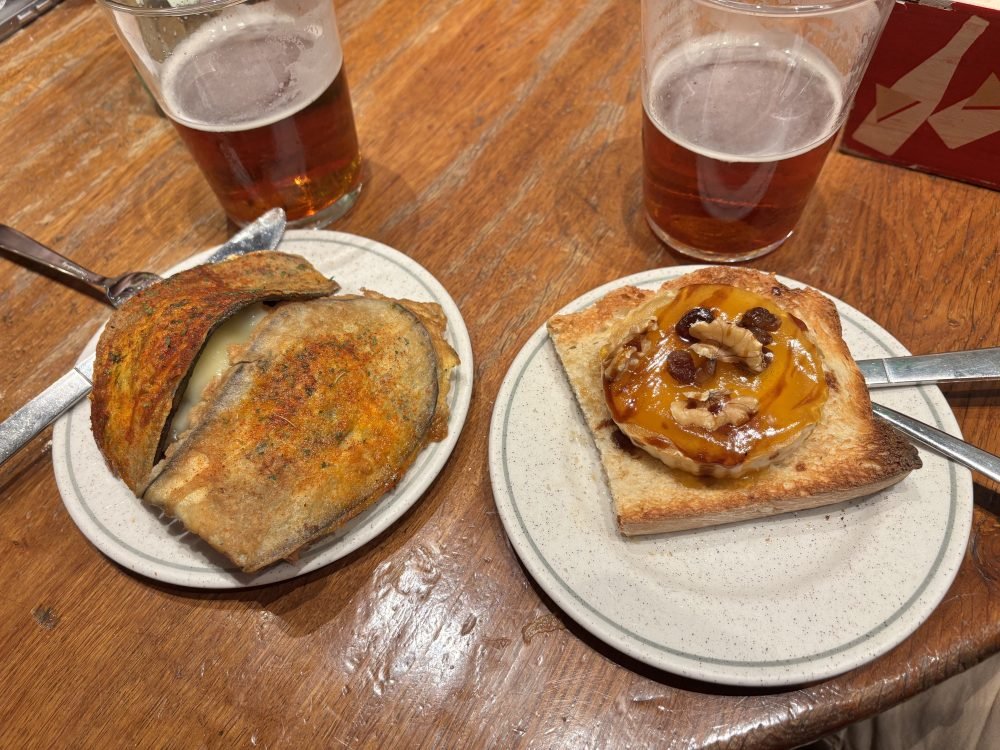
Pintxo Berenjena (eggplant) and Pintxo Queso Cabra (goat cheese)
For drinks we had the Kalimotxo (red wine and Coke) and Ambar Export beer.
Sidenote: the concept of mixing red wine and Coke sounds pretty weird if you’re a westerner but you just have to try it. With the right type of red wine, you cannot ask for a more refreshing cold drink than a Kalimotxo!
Over drinks and food, we talked about expectations versus reality of walking the Camino. For me, I’d expected more overt religious elements—missionaries along the path, fathers giving blessings, pilgrims wearing big crosses. But the Camino so far had turned out subtler and more personal. Diwa shared a moving story about a Spanish man walking for his two-year-old daughter who has cancer.
Goxua: A Taste of the Basque Country
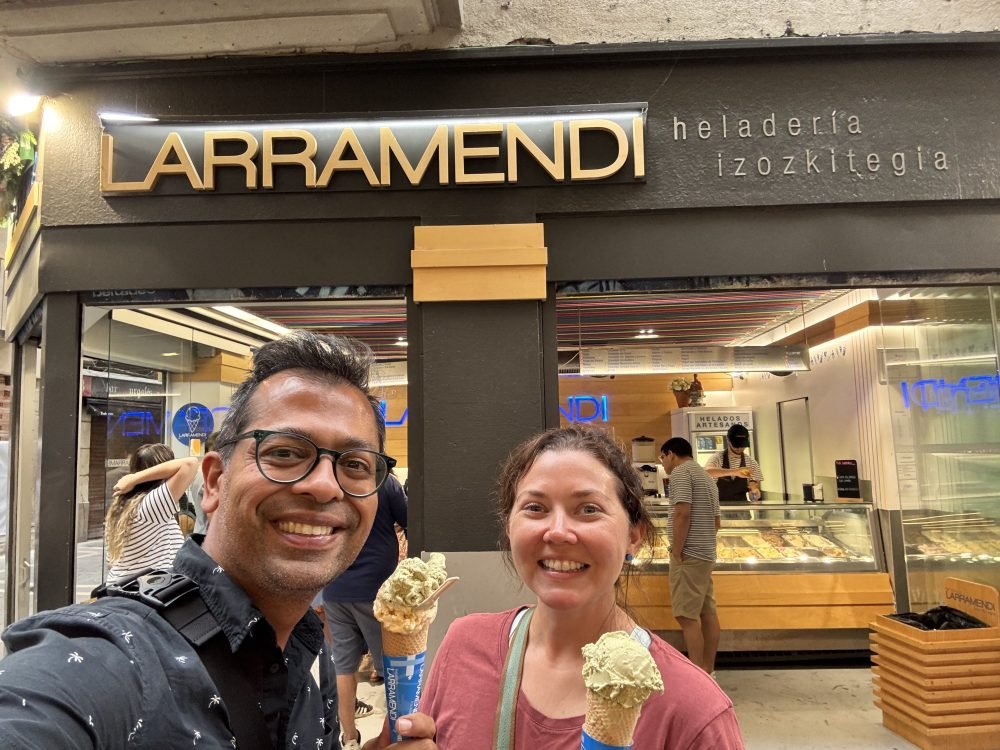
We finished the night with gelato at Larramendi. Ashley got pistachio, and I tried Goxua, a typical Basque flavor. The gelato was so good that I would likely go out of the way to come back if I’m ever back in northern Spain.
Tomorrow we’d have a long, hot walk to Puente la Reina ahead of us. But tonight, we’d enjoyed the art of slowing down, of being tourists instead of pilgrims, of savoring a city that has welcomed travelers for over a thousand years.
As we walked back to the hostel, I thought about those cathedral carvings—heaven, earth, and hell all depicted above one doorway. The Camino contains all three: the heavenly moments of connection and beauty, the earthly reality of aching feet and practical concerns, and the hell of pushing through pain and doubt.
But mostly, it’s about the middle—the earthly celebration of simply being alive and walking through this beautiful world.
Rest day stats:
Walking: Minimal (just around the city)
Sleep: 9 glorious hours
Churros found: 0
Unexpected bakery treasures: Many
Historical insights: Countless
Lesson learned: Sometimes the best days are the ones without a destination


